In crochet, a flower is the perfect motif for learning to read a chart: a green stem, a few petals, a centre in another colour, and that is all. I have gathered six flowers from the catalogue here, and I crocheted every one of them myself in tapestry crochet. Each chart is free, with its colour count worked out stitch by stitch, and each one uses single crochet (US) only, so there is no other stitch to learn.
Three red flowers to start with
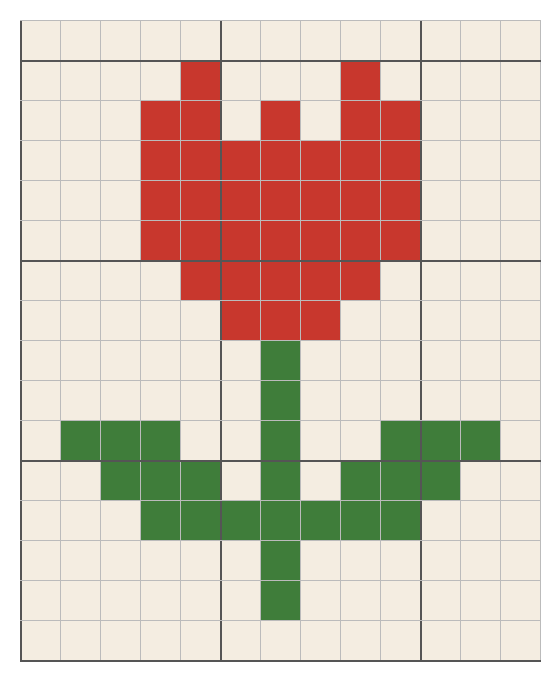
If you are a beginner, begin with the red tulip: it needs only three colours, and its outline reads at once. The poppy and the rose add a fourth colour, black for the poppy’s heart and burgundy for the rose’s. I suggest carrying the green yarn behind the work without pulling it: too much tension makes the petals buckle, and it shows from afar against a flat red.

Red tulip crochet chart: an easy first pattern
A red tulip in three colours, the ideal chart for a first try.
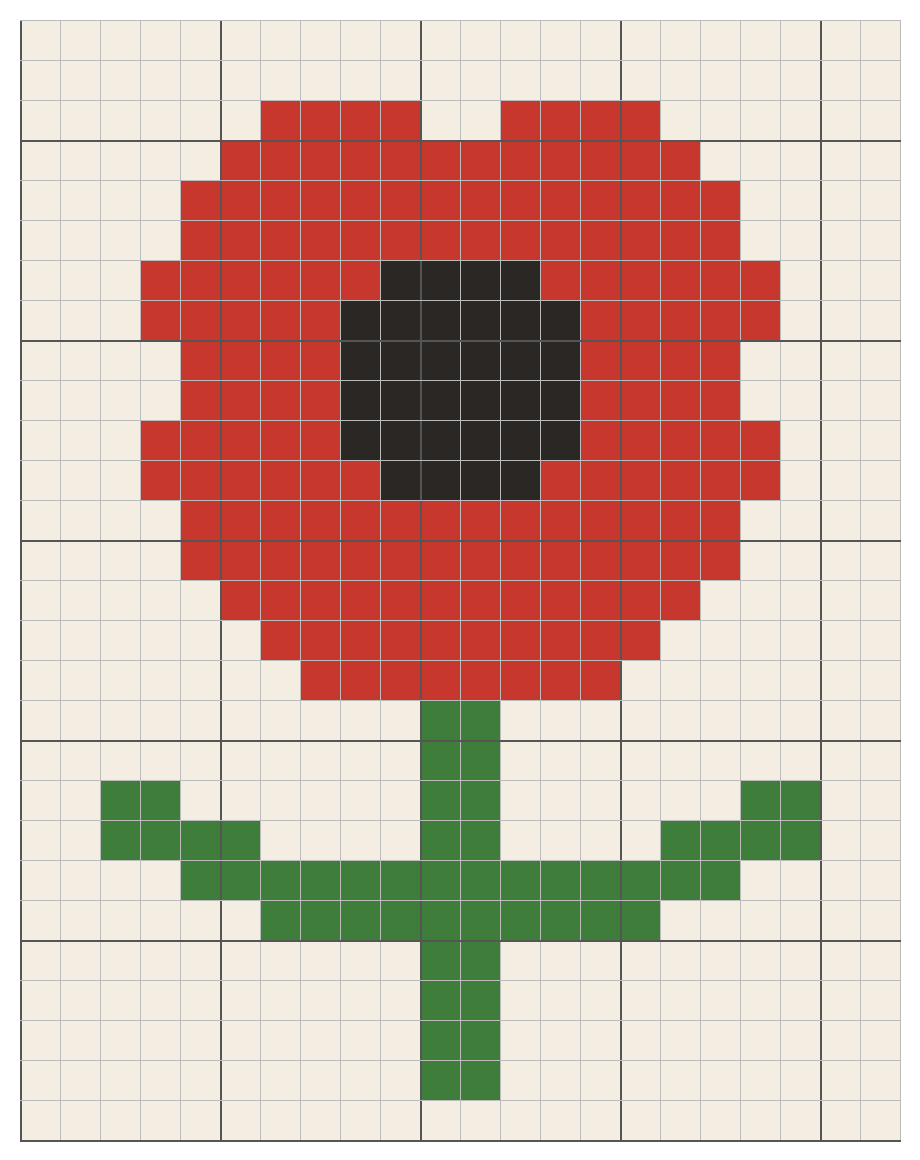
Poppy crochet chart: free pattern
A red poppy with a black heart, on a green stem with two leaves.
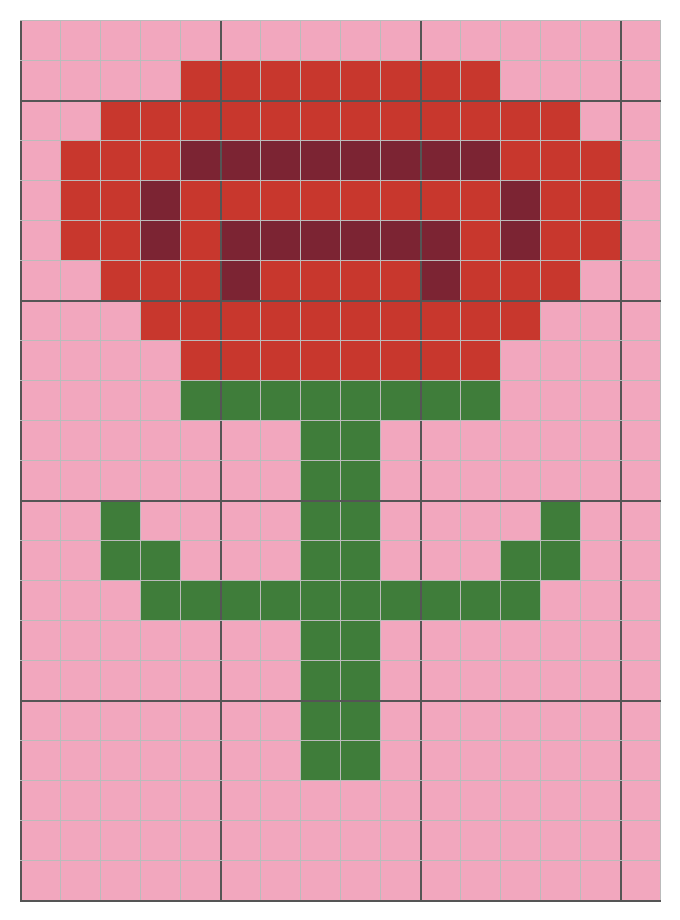
Red rose crochet chart: free pattern
A red rose with a burgundy swirl at its heart, on a green stem with two leaves and a sugar pink background.
The rose is worked on a sugar pink background, in fine cotton with a 2.5 mm hook. It is the most delicate of the six, so I save it for the end of the evening, when my hands are warm. The poppy sits happily in DK acrylic with a 4 mm hook, as long as you pull your stitches snug around the black centre.
A bouquet in soft colours
The violet, the daisy and the sunflower play on contrast. The plum violet and its yellow centre stand out on an ecru background. The white daisy floats on sky blue, like a summer morning. The sunflower fills almost its whole chart, with buttercup yellow petals around a brown centre ringed with orange.
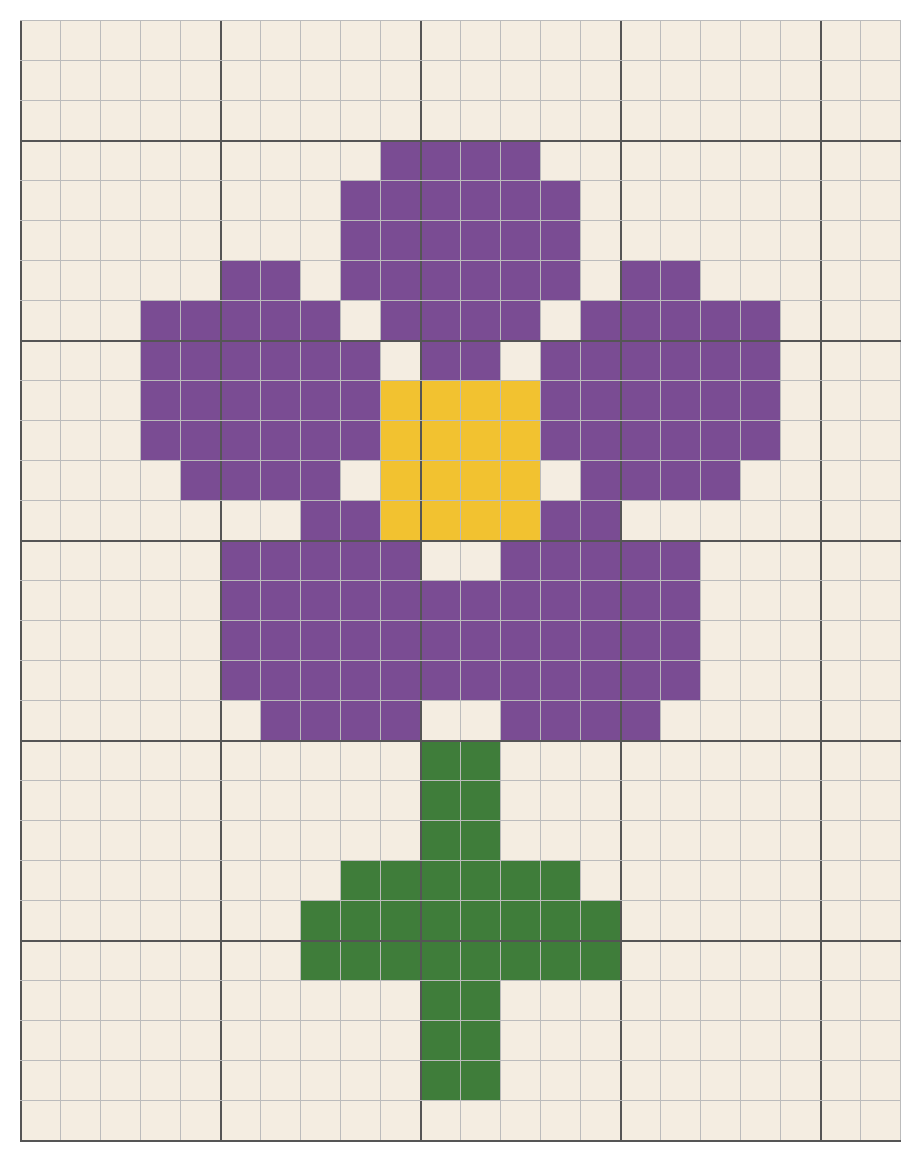
Violet flower crochet chart: free pattern
A violet with five plum petals and a yellow heart, set on a green stem with two leaves.
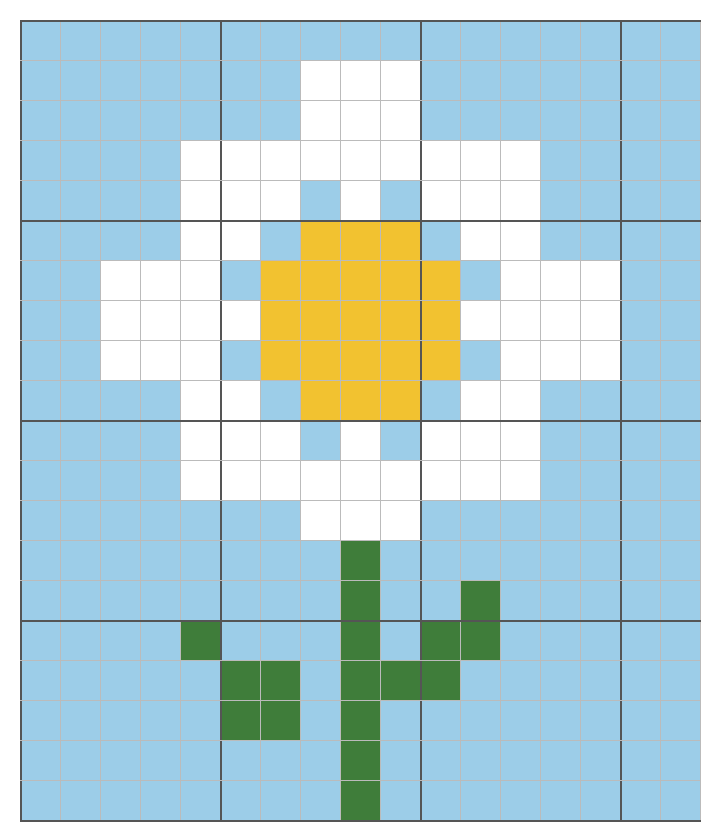
White daisy crochet chart: free pattern
A white daisy with a yellow center on a green stem, with two leaves, on a sky blue background.
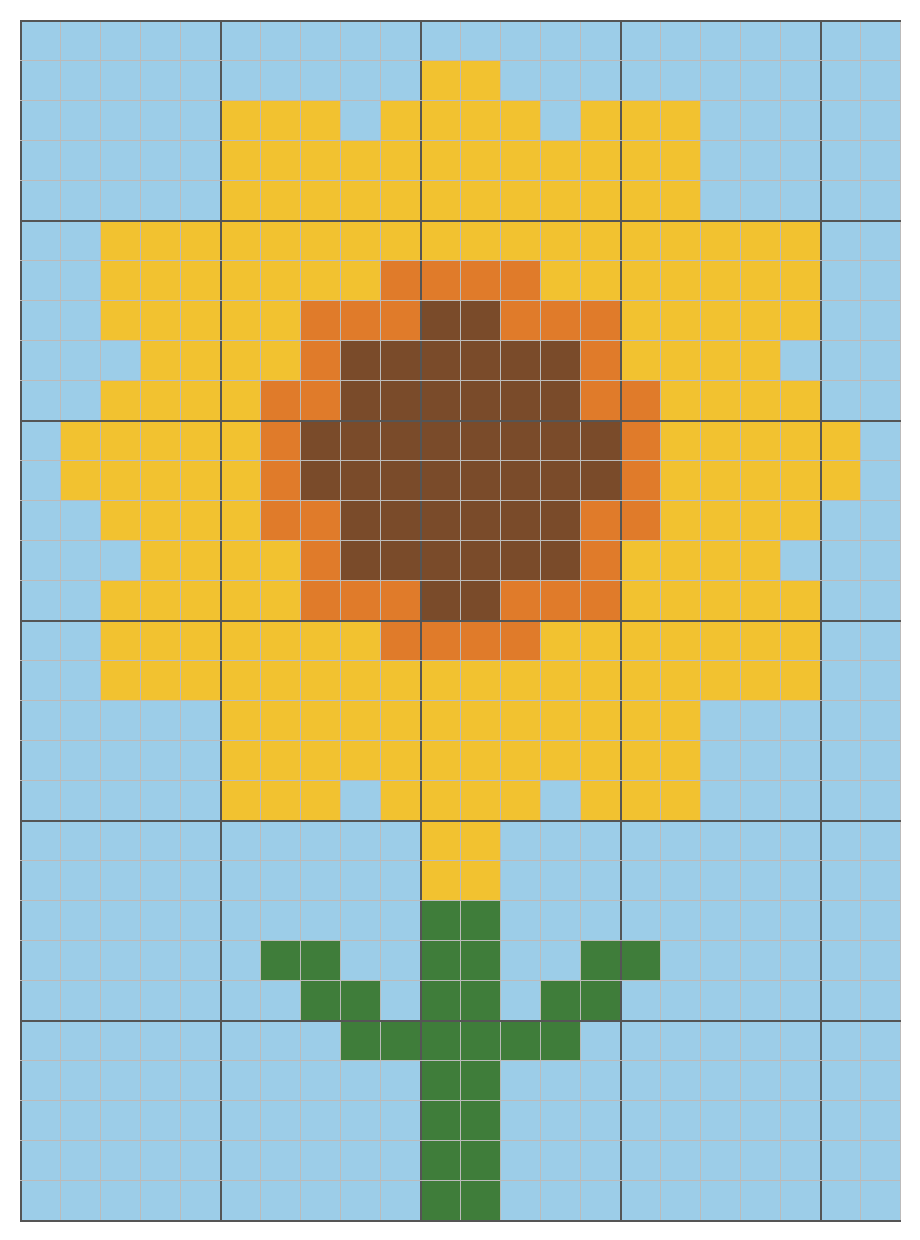
Sunflower crochet chart: free pattern
A sunflower with a brown centre ringed in orange, yellow petals, a green stem and two leaves.
With its five colours, the sunflower is the richest of the bouquet: keep it for the day you have already made one or two flowers. The petals mean changing yarn often, but each area is wide enough that the work does not tangle. Keep your balls of yarn in the order of the chart, from yellow to brown, so you never have to hesitate in the middle of a row.
Which yarn and which hook for a bouquet
Yarn choice changes the finished size. Allow about 0.5 cm per stitch in fine cotton, 0.6 cm in DK cotton and 0.8 cm in aran yarn. For a bouquet that hangs together, use the same yarn for all six charts: every flower will come out the same size and you can sew them side by side on a cushion or a blanket.
Tapestry crochet needs a firm tension. I use an ergonomic hook when I make several flowers in a row, with balls of DK cotton in the colours of the bouquet. For the larger charts, an aran cotton yarn gives a firmer result and very crisp colours.
One last tip: crochet the stem and the two leaves first, then work up towards the flower. The simplest part is under your fingers while your hand finds its rhythm, and the heart of the flower arrives once you are settled into the chart.
Amazon links are affiliate links: a purchase may earn us a commission at no extra cost to you.