When I want a quick chart, I crochet a bird: the silhouette reads at once and the colors are bold. Here are the seven birds in the catalog, from the winter robin to the swan I added this week. Each pattern page shows its chart, its stitch count and the yarn I suggest. I have tested every one of them myself, in cotton and in wool, so the notes below come from real stitches.
Four garden birds
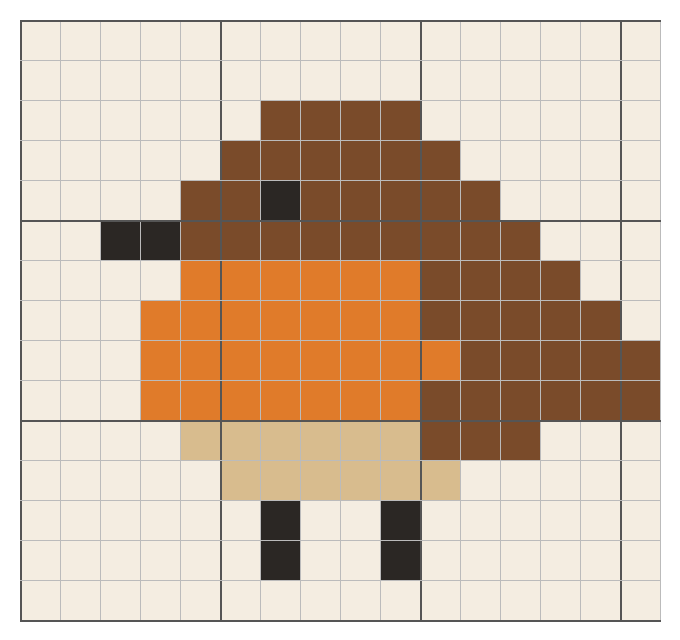
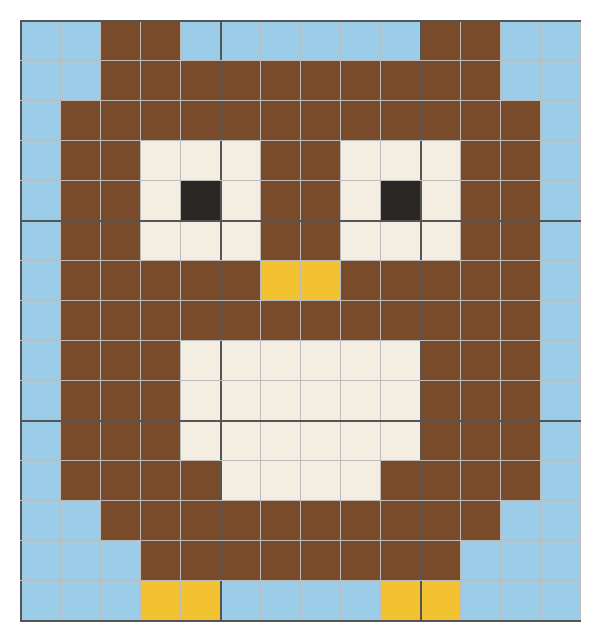
I always start with the blue tit: few colors and a neat yellow belly, ideal if you are new to tapestry crochet. The robin needs a little more care, because its orange breast stops sharply against the grey. The owl and the bird’s nest play on brown and ecru, with big blocks of color that are easy to hold.
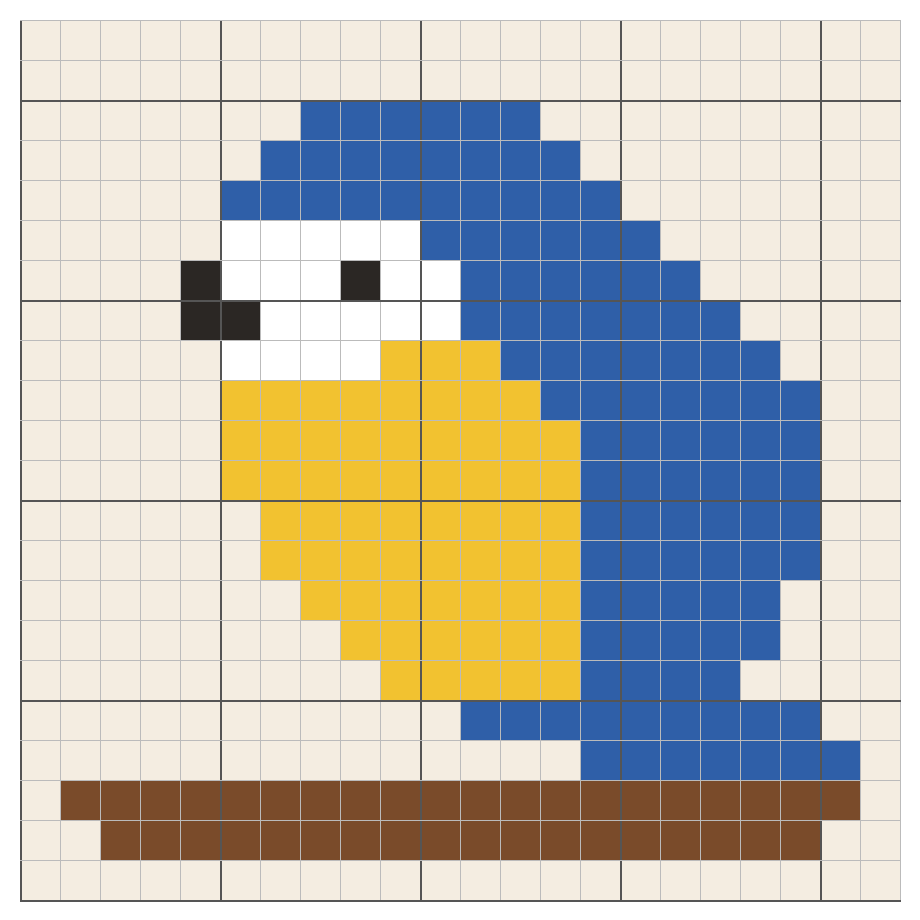
Blue tit crochet chart: free pattern
A blue tit in profile with a blue cap, white cheek and yellow belly, perched on a brown branch.

Robin crochet chart: free pattern
A robin in profile with an orange breast and brown back.

Owl crochet chart: free pattern
A brown owl with big round eyes, a yellow beak and an ecru belly on a sky blue background.
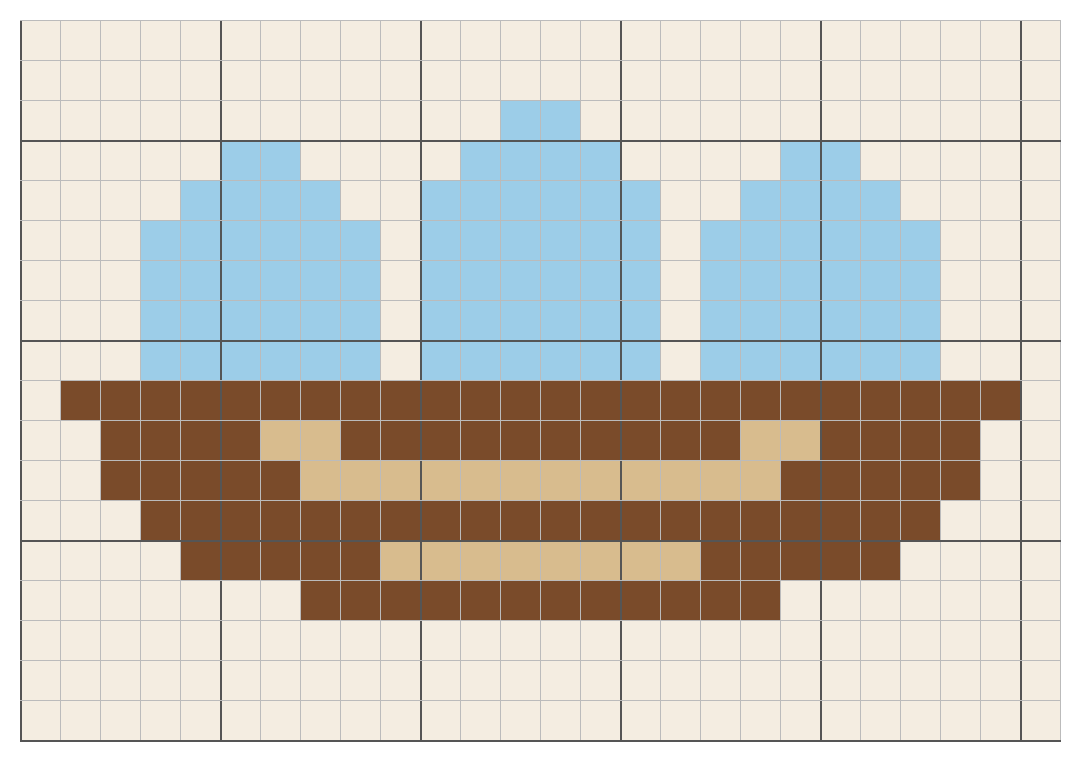
Bird’s nest crochet chart: free pattern
A woven straw nest holding three blue eggs.
These four charts take one or two evenings. Keep the background yarn within reach: on a small bird you pick it up almost every row, and it should never dangle behind the work.
Three water and ice birds
The yellow duck works up in one evening, with an orange beak added at the end. The penguin plays on black against white: carry the yarn behind the white belly instead of cutting it. As for the swan, the newest arrival, it is 26 stitches wide; its neck is only two or three stitches, so watch your tension to keep it straight.
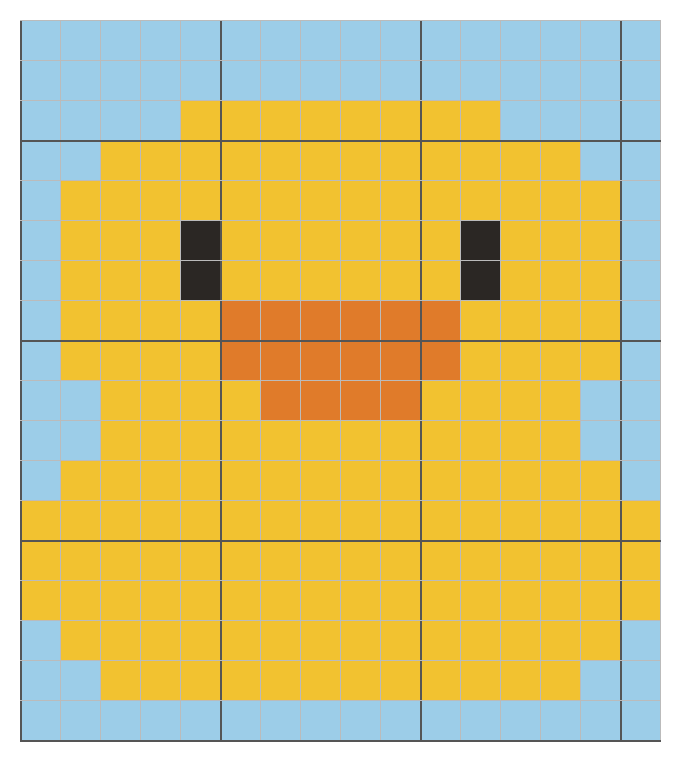
Yellow duck crochet chart: free pattern
A yellow duck seen from the front, with an orange beak and two well-spaced black eyes.
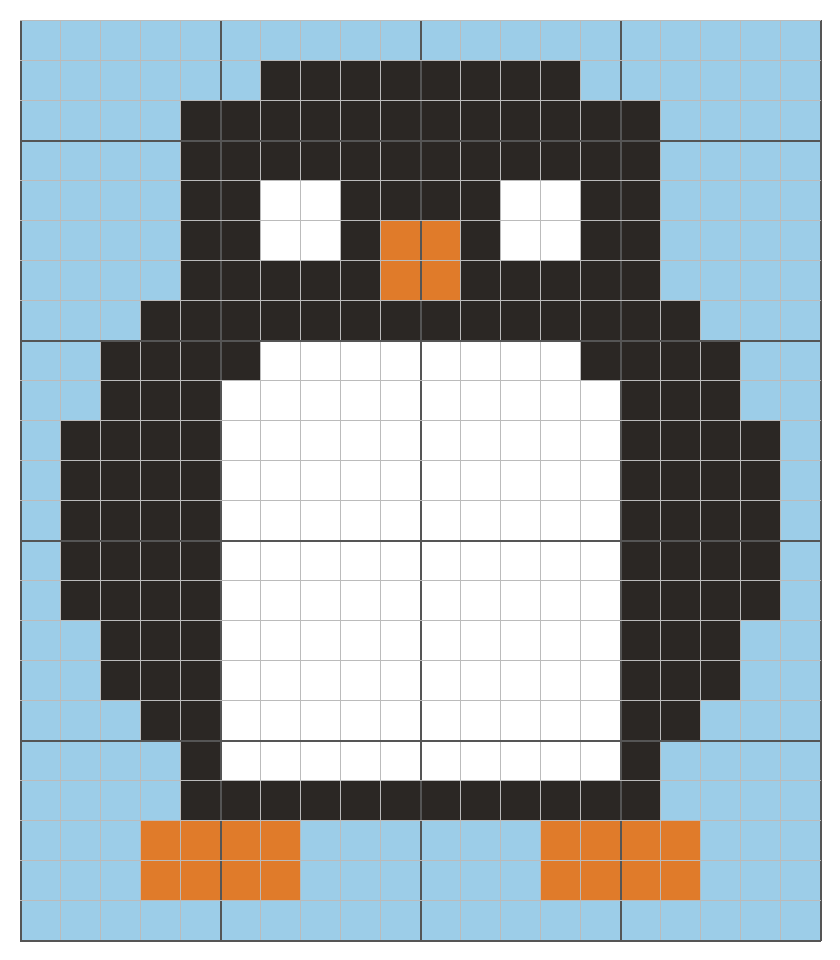
Penguin crochet chart: free pattern
A black and white penguin seen from the front, with a big white belly and an orange beak, on a sky blue ground.
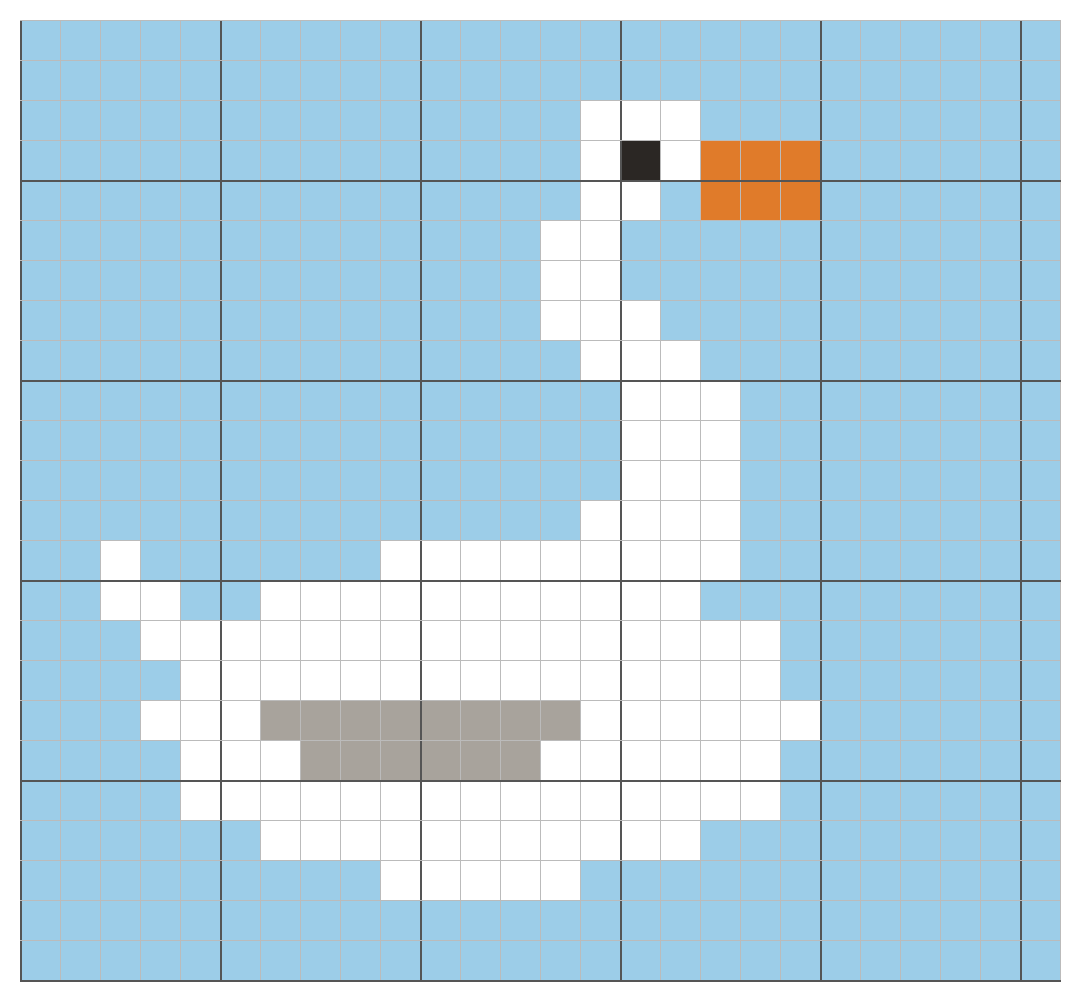
Swan crochet chart: free pattern
A white swan with an S-shaped neck and an orange beak, facing right on a sky blue ground.
These three silhouettes stand out on a light blue ground. For a sea or ice effect you can add a strip of ground across the full width, but remember to count it in your finished size.
Which one to crochet first?
If you have one evening ahead of you, pick the duck or the blue tit: their charts have few colors and you see the result quickly. For a weekend, choose the robin or the penguin, whose contrasts ask for a little concentration. The swan, the owl and the nest suit you once you have a few charts behind you.
Whatever you choose, mark the row where you stop with a pencil: a chart of twenty-four rows is easily lost in the evening light, and recounting stitches costs more time than you would think. I also fold a small piece of paper to cover the rows already done.
Yarn, hook and measurements
For a bird this size I use chunky yarn and a soft-handled 6 mm hook: expect about 1 cm per stitch, so a cushion of roughly twenty centimeters. A set of stitch markers helps you spot every fifth row, as on the chart.
With fine cotton and a 2.5 mm hook, the same charts make bookmarks of about 0.5 cm per stitch. A useful reminder: this is tapestry crochet in single crochet (US), and the chart reads from the bottom up, one row out, one row back. If you cannot choose between two birds, pick the one with fewer colors and your stitches will come out more even.
Amazon links are affiliate links: a purchase may earn us a commission at no extra cost to you.