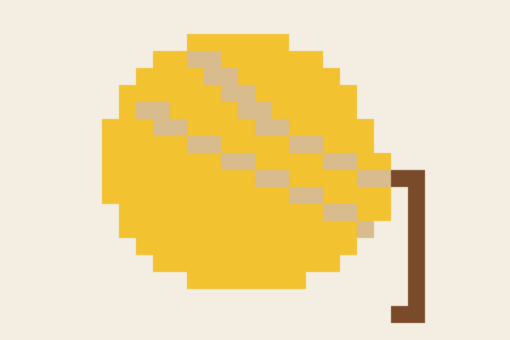
The galette des rois, the French Epiphany cake, arrives in January, but crochet needs a head start: table decorations are best made several weeks ahead. I have tested the five charts in the catalogue devoted to Twelfth Night, from the golden cake to the baker’s tools, and here is how I work them.
Five charts for a Twelfth Night table
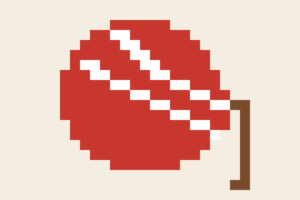
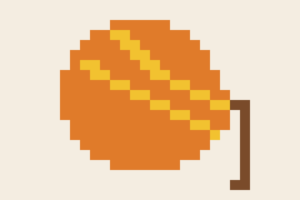
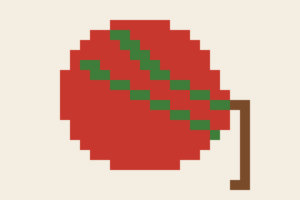
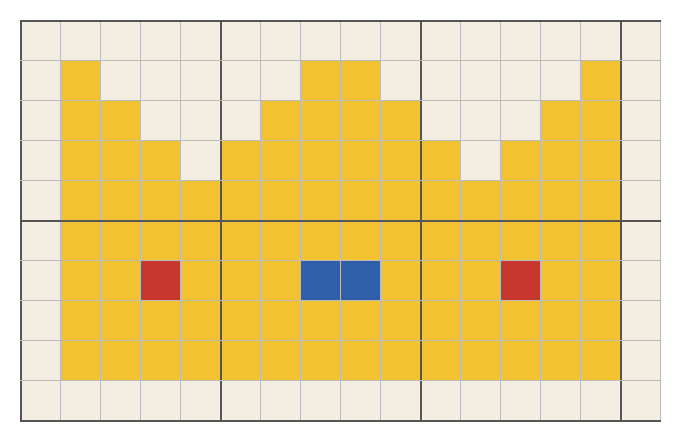
The galette des rois is the centrepiece: 24 × 24 stitches, seen from above, with an orange crust, brown rays and a small yellow bean in the middle. In DK cotton it measures about 14 cm square. Next to it, the golden crown is the smallest, only 16 × 10 stitches: perfect for a bookmark or a greeting card.
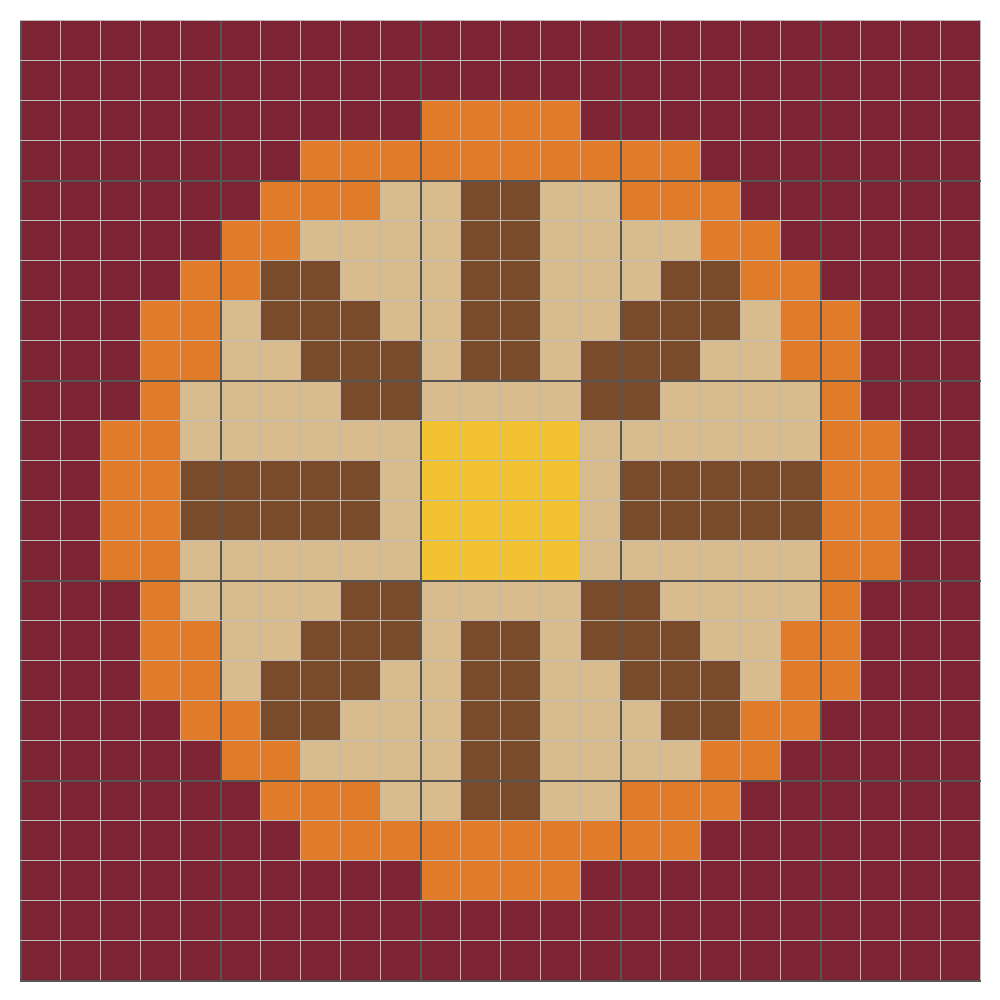
Galette des rois crochet chart: free pattern
A galette des rois seen from above, with an orange crust, brown scoring lines and a yellow charm in the middle, on a burgundy ground.

Twelfth Night crown crochet chart
A golden crown set with red and blue stones, for Epiphany.
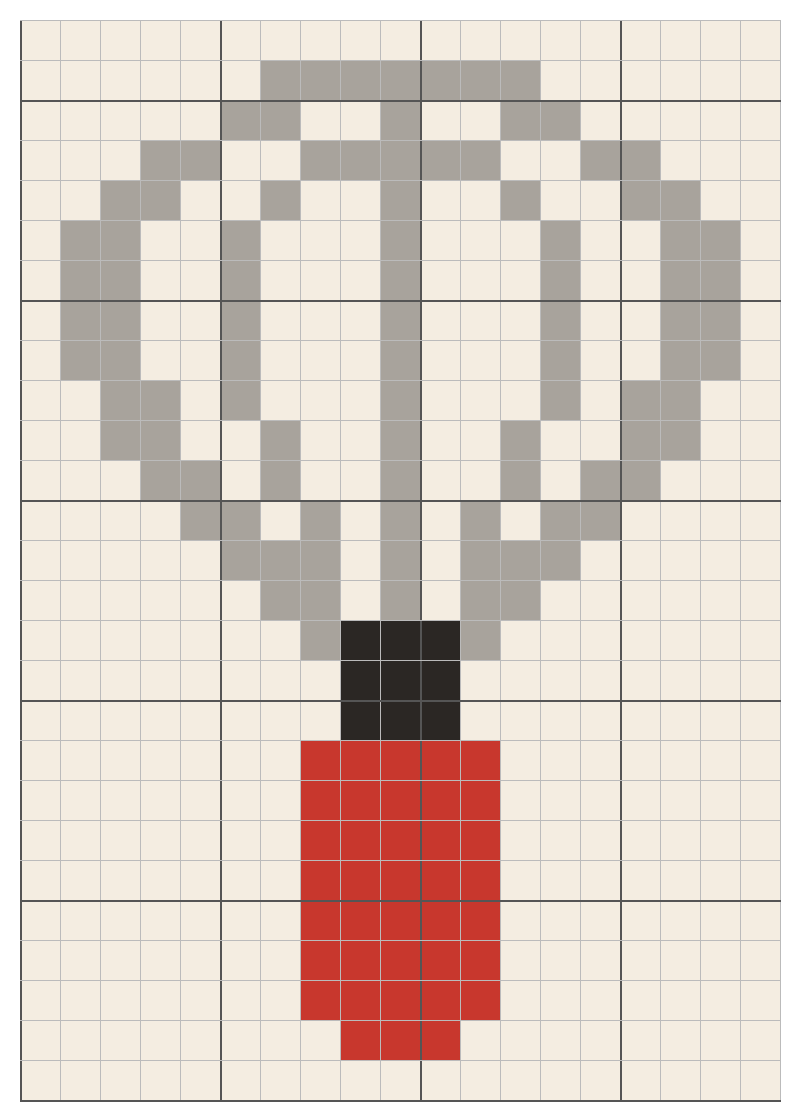
Pastry whisk crochet chart: free pattern
A pearl-grey pastry whisk with looped wires and a red handle on an ecru background.
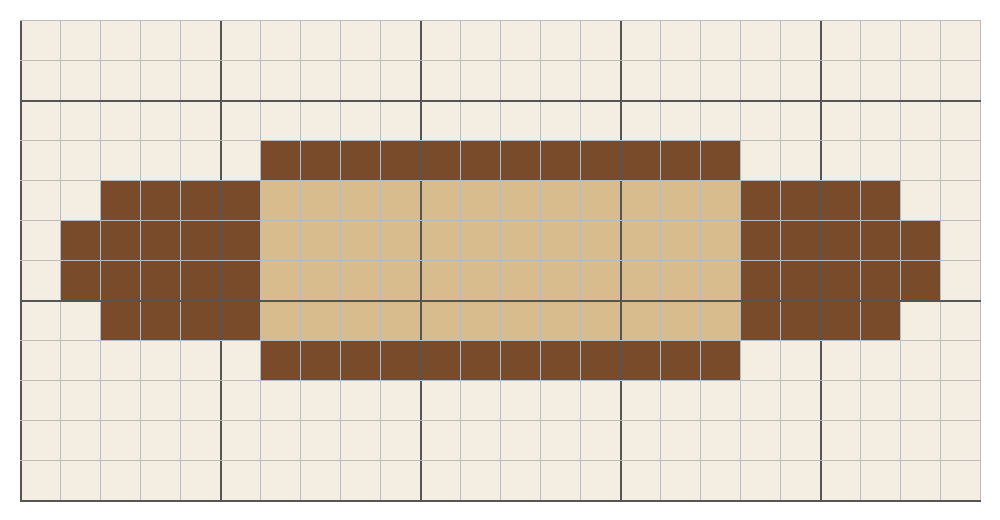
Rolling pin crochet chart: free pattern
A sand-beige rolling pin outlined in brown, with its two handles, to go with the king cake.
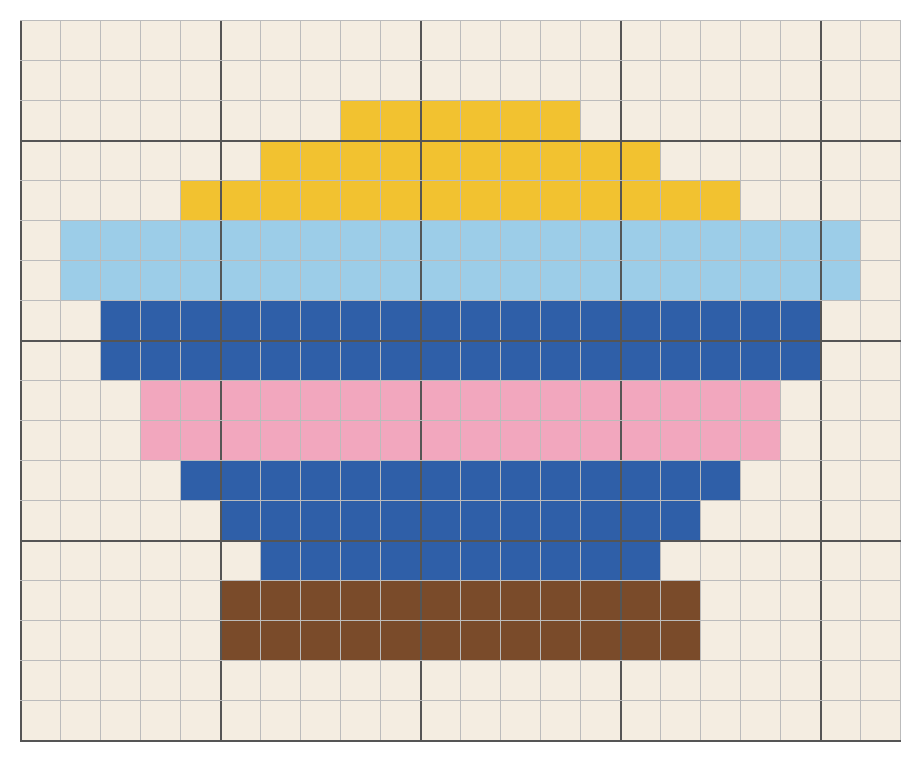
Baking bowl crochet chart: free pattern
A blue mixing bowl with a sky-blue rim and a pink band, filled with yellow batter, on an ecru ground.
In the kitchen corner, the whisk, the rolling pin and the mixing bowl make a coherent trio. The rolling pin is the easiest chart of the set, 24 × 12 stitches in three colours: I recommend it as a first tapestry crochet project. The bowl, with its six colours, asks for more patience.
The yarn and hook I choose
For trivets or coasters I use DK cotton and a 3.5 mm hook: the fabric stays dense and the motif crisp, at about 0.6 cm per stitch. If you prefer a softer feel, DK acrylic with a 4 mm hook works well for a decoration that will not go in the washing machine. You will easily find some DK cotton yarn online, and an ergonomic 3.5 mm hook if your wrists tire quickly.
One tip: buy one more ball than planned for the background. On the galette the background colour fills more than half of the chart, and running out of yarn on the last row is no fun. I also write down the number of stitches of each colour change on a scrap of paper before starting, which saves a lot of unpicking later.
Getting the colours right without puckering
All these charts are read from bottom to top, one row out, one row back. The idea of tapestry crochet is simple: you work in single crochet (US) and carry the unused colours behind the work, enclosed in the stitches. Never pull that carried yarn tight, or the fabric puckers and the galette turns oval.
For the yellow bean in the centre of the galette, I cut the yarn and weave in the ends on the wrong side rather than carrying it across the whole width. A set of stitch markers also helps to find the middle row, especially for the crown, which has to stay symmetrical.
Once the pieces are finished, steam-block them under a damp cloth and leave them to dry flat: the corners come back square. You can then sew them onto a tablecloth, make them into a cushion or string them as a small kitchen garland. You will have an Epiphany decoration ready well before the first galette, and one to keep from year to year.
Amazon links are affiliate links: a purchase may earn us a commission at no extra cost to you.