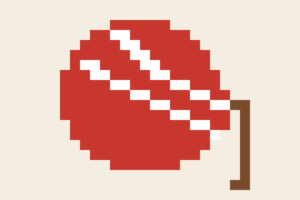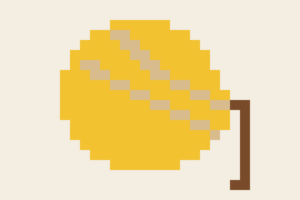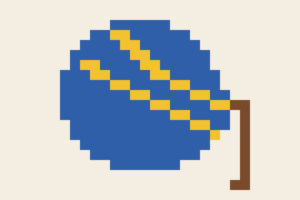
When the trees empty and the markets smell of tangerines, I dig out my leftover orange and green cotton. Fruit is my favourite subject for this season: round shapes, bold colours and a silhouette you recognise at once. Here are seven charts I have tested with my own hook, from today’s persimmon to the chestnut that is just waiting for the fireplace.
Apple, pear and plum: orchard fruit
These are the easiest to start with. Each fruit is one big shape with a stem and a leaf. I work them in DK cotton with a 3.5 mm hook, and each one ends up as a coaster of about 12 cm.
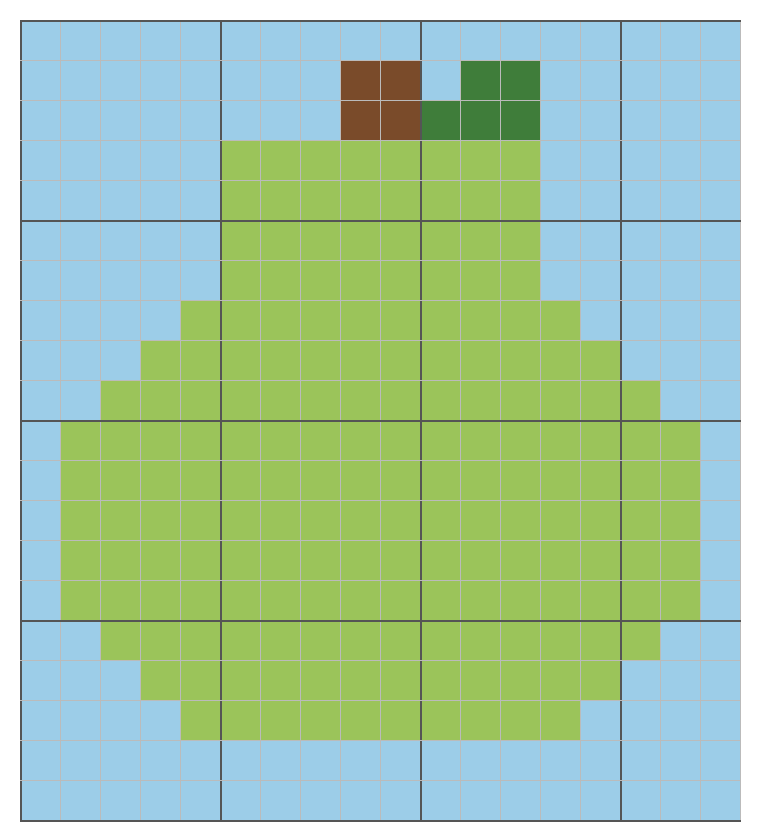
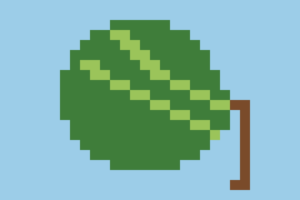
Pear crochet chart: free pattern
A lime green pear with a brown stem and a small fir green leaf, on a sky blue ground.

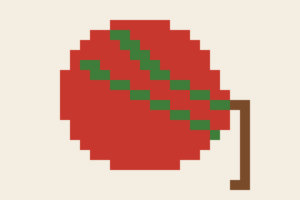
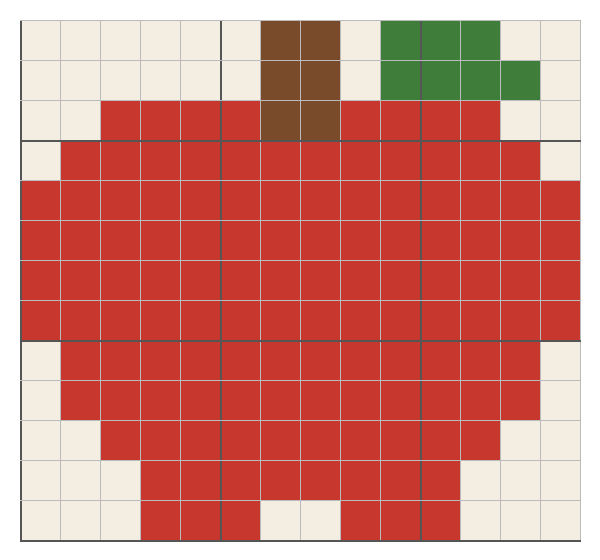
Red apple crochet chart: free pattern
A red apple with a brown stalk and a green leaf on an ecru background.
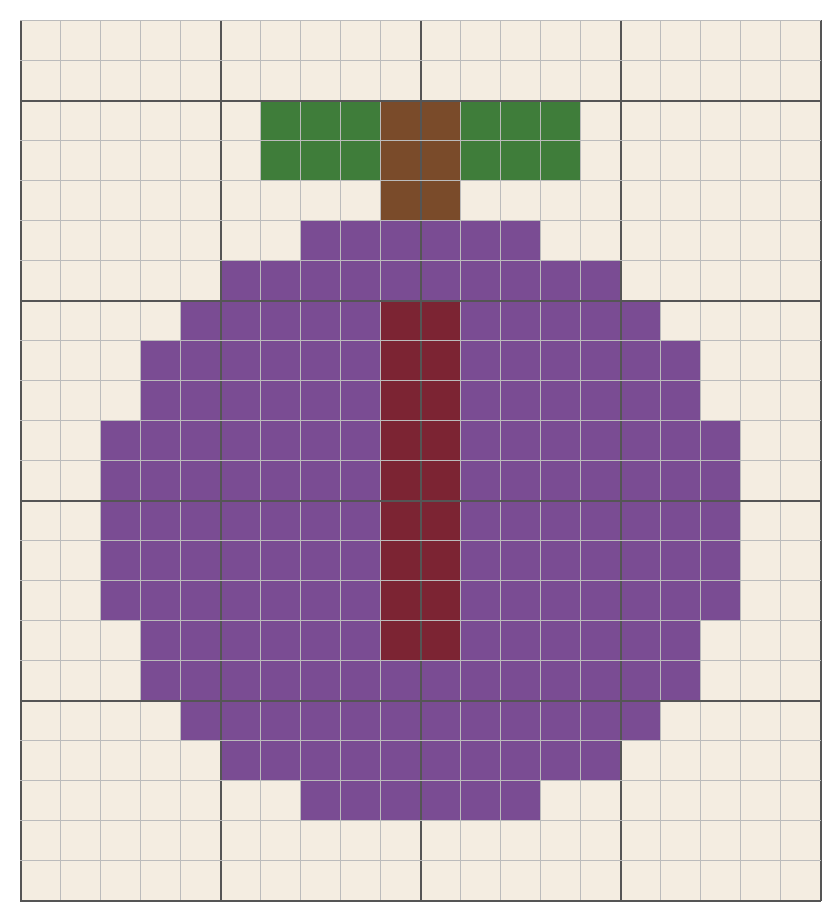
Plum crochet chart: free pattern
A purple plum split by a burgundy seam, with a brown stalk and two small green leaves.
My order of work never changes from one chart to the next: I count the stitches of the first row, work the body, then climb towards the stem and the leaf. At the end I weave in the ends with a tapestry needle and steam the piece so it lies flat.
The plum needs a little more attention: its burgundy line is worked with a separate length of yarn, not carried behind. For the apple, keep the red in one piece and do the green leaf last.
Persimmon, tangerine and grapes: bright colours
This is the trio that brings light to the table. The persimmon is the newest: one big orange block, a green calyx and a brown stem of four stitches. The tangerine is worked almost the same way, with a little less green. The bunch of grapes plays on the repetition of small purple balls.
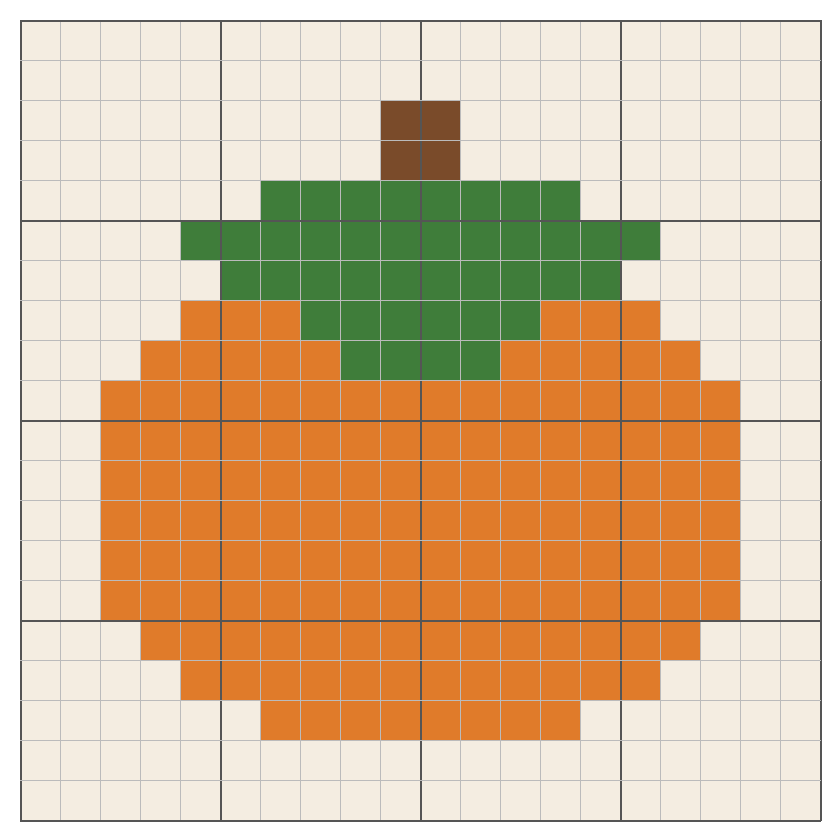
Persimmon crochet chart: free pattern
A plump orange persimmon topped with its green four-pointed calyx and a short brown stem.
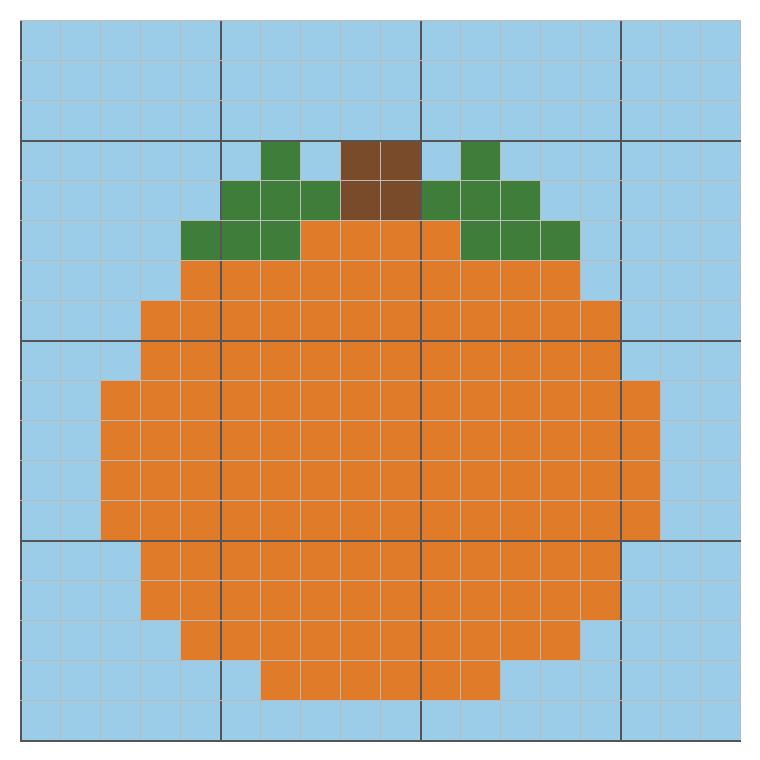
Tangerine crochet chart: free pattern
A pumpkin-orange tangerine with two green leaves and a small brown stem, on a sky blue background.
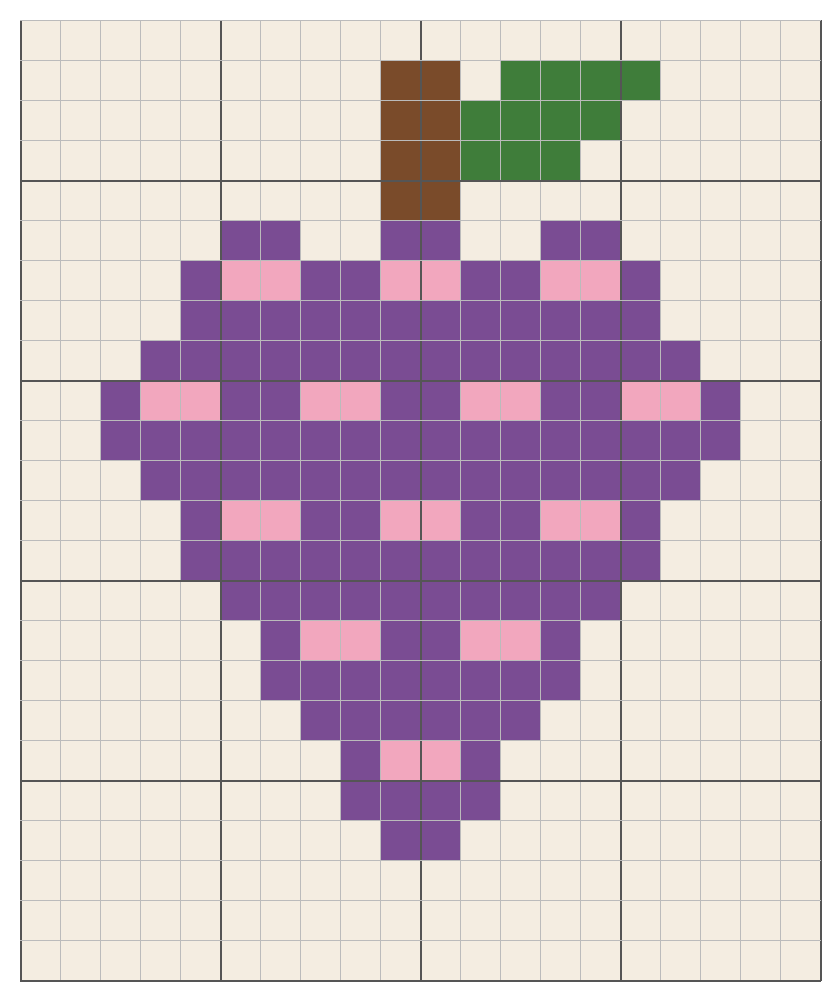
Bunch of grapes crochet chart: free pattern
A purple bunch of grapes with shiny berries, a brown stem and a green leaf on an ecru background.
For these three charts, I suggest a firmly twisted yarn: the orange shows better and the stitches stay crisp. Allow about 0.6 cm per stitch in DK cotton, so a 20-stitch chart gives a 12 cm square.
Chestnut, walnut and acorn: nuts of the season
Browns and beiges change the scenery. The shapes here are smaller, so they work up faster, and they suit a bookmark or a table decoration. I work them in fine cotton with a 2.5 mm hook to get tight stitches.
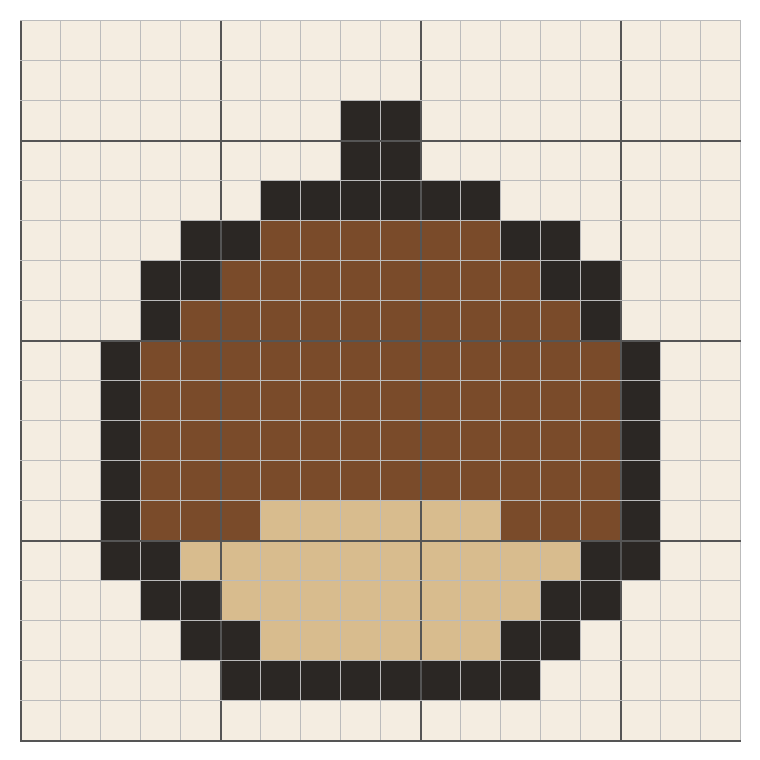
Chestnut crochet chart: free pattern
A brown chestnut with a pale base and a dark tip, nicely round on an ecru ground.
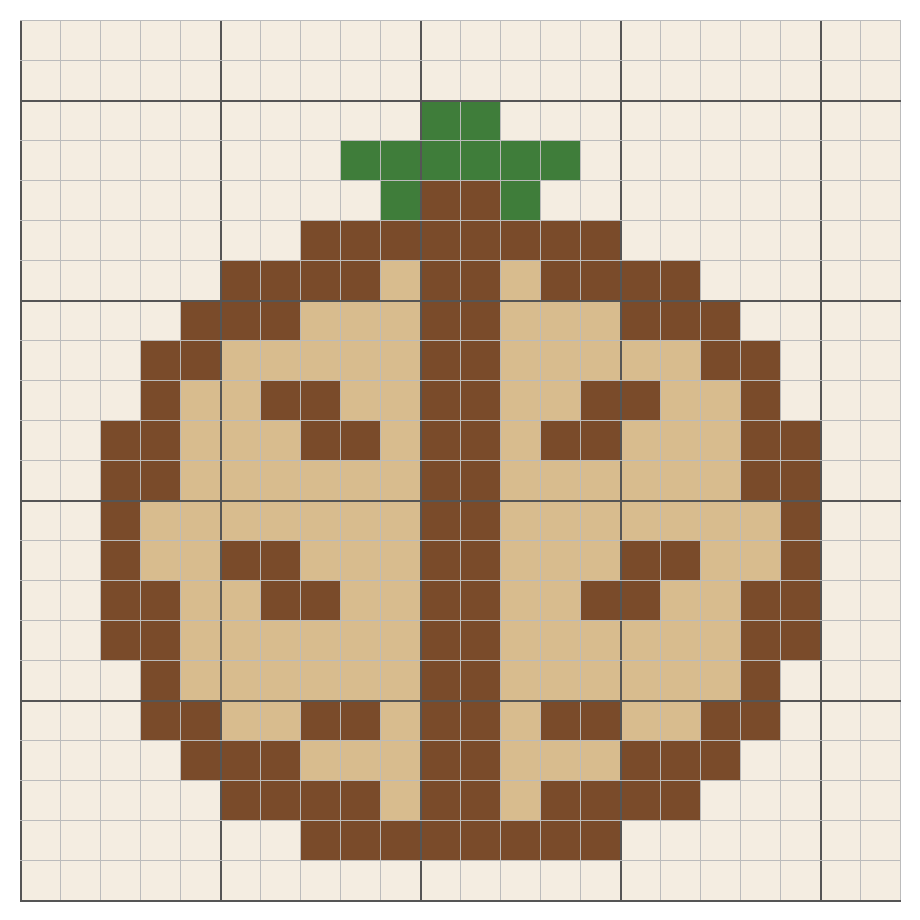
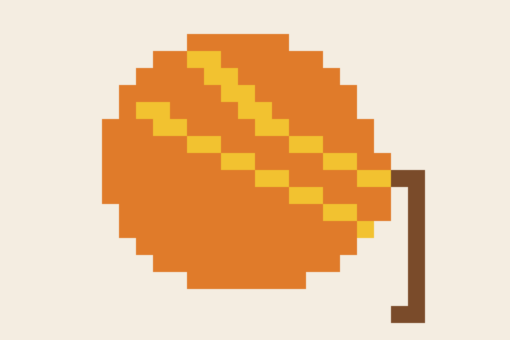
Walnut crochet chart: free pattern
A sand-coloured walnut with a round shell, split by a brown ridge and topped with a small green leaf.
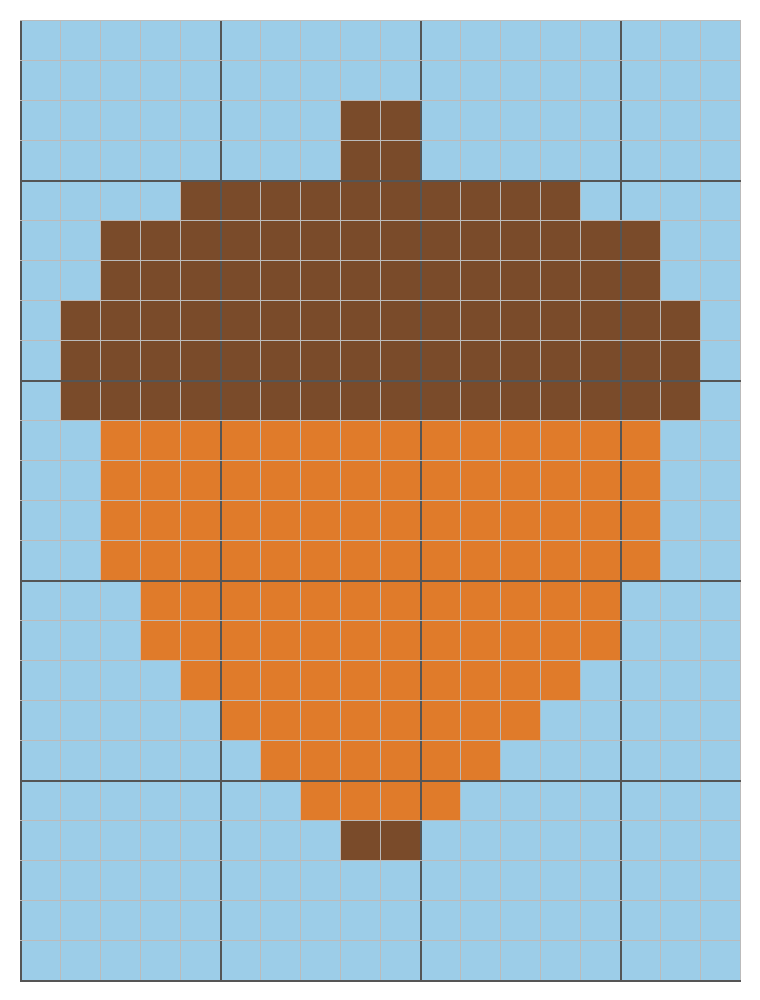
Acorn crochet chart: free pattern
An orange acorn under a brown cap dotted with black, set on a sky blue background.
Read the chart from bottom to top, one row going, one row coming back, in single crochet (US). If a colour comes back only after two or three stitches, carry the yarn behind the work. Any further and you should cut it and pick it up again: the row stays supple and the shape does not warp.
The tools I use
Nothing complicated: a good DK cotton in shades close to our palette is enough. Here is what I always keep within reach: DK cotton yarn for crochet, a 3.5 mm crochet hook and stitch markers. The markers are mostly useful for finding the middle of a row, handy when the motif is symmetrical, like a fruit seen from the front.
To finish, join two fruits into a garland, or slip one under your morning cup. A small hand-crocheted fruit soon does the rounds of the house, and you find yourself making a new one every week.
Amazon links are affiliate links: a purchase may earn us a commission at no extra cost to you.