Every time I draw an animal, I ask myself the same thing: what makes it recognizable in thirty stitches or fewer? An orange beak, two round eyes, a pale belly. Here are eight charts I have crocheted myself, sorted by family, with the yarn and hook I gave each of them.
Four birds, from white bellies to red breasts
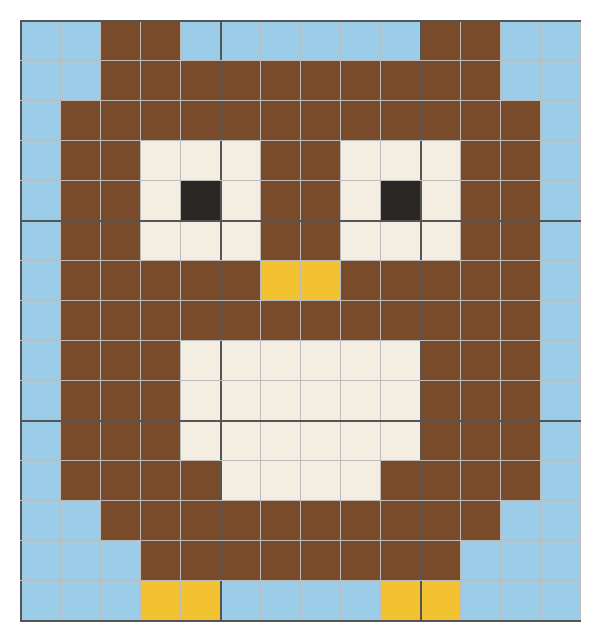
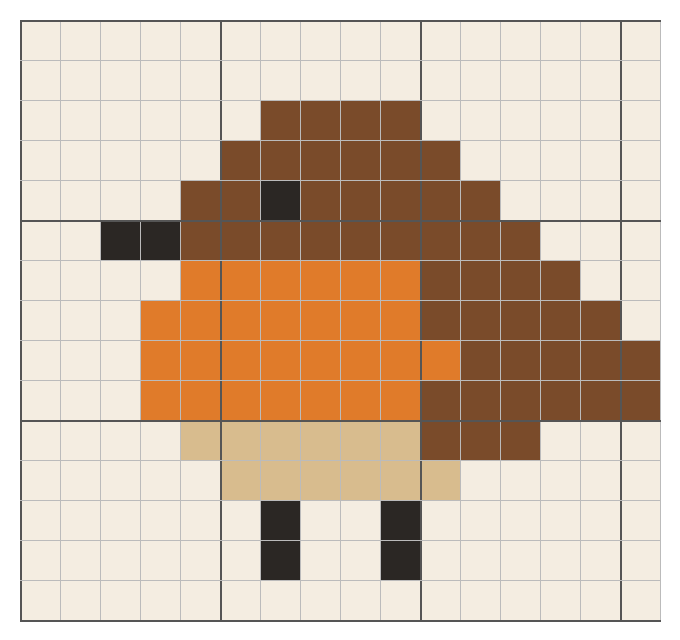
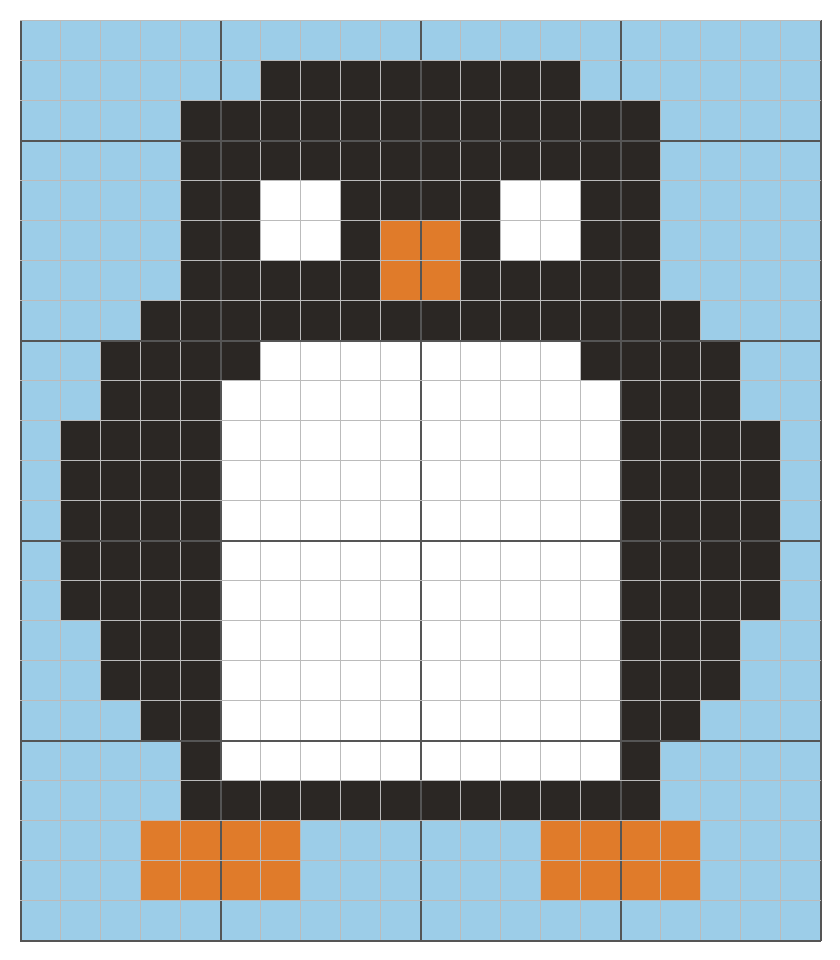
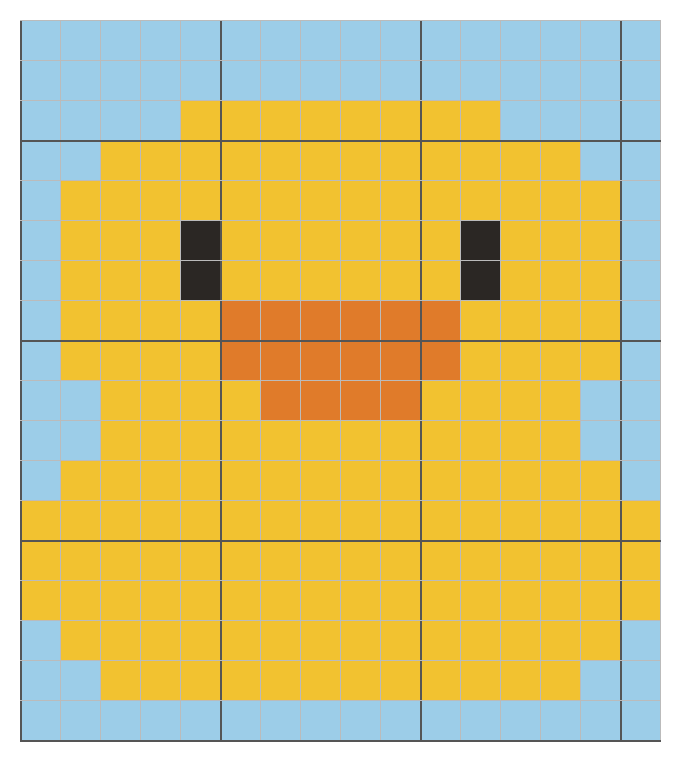
Birds are the easiest to read: a round outline, a beak, two eyes. The penguin is the biggest of the batch at 20 × 23 stitches, with its big white belly. I worked it in aran yarn with a 5 mm hook to make a child’s cushion. The yellow duck, the owl and the robin fit in 16 × 18 stitches at most: one evening is enough.
Penguin crochet chart: free pattern
A black and white penguin seen from the front, with a big white belly and an orange beak, on a sky blue ground.
Yellow duck crochet chart: free pattern
A yellow duck seen from the front, with an orange beak and two well-spaced black eyes.

Owl crochet chart: free pattern
A brown owl with big round eyes, a yellow beak and an ecru belly on a sky blue background.

Robin crochet chart: free pattern
A robin in profile with an orange breast and brown back.
For a bird, the background matters as much as the motif. Sky blue makes the penguin’s black and white stand out, and a lighter ground sets off the duck’s yellow. Choose a clean background that never blends into the outline, and keep the same shade across the whole chart.
Four creatures from the pond, the garden and the fireside
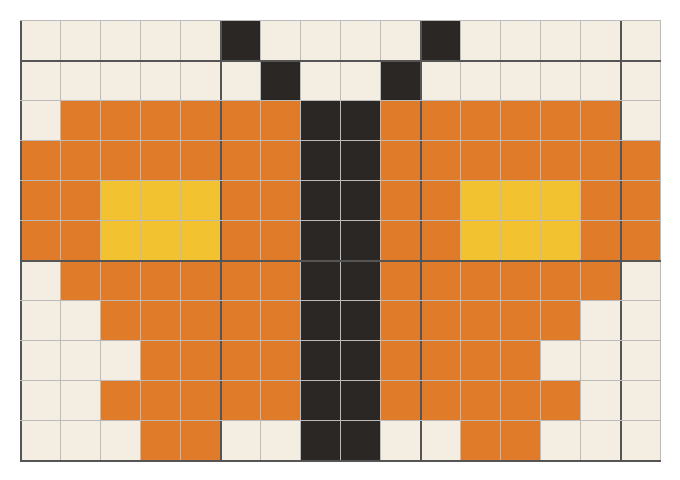
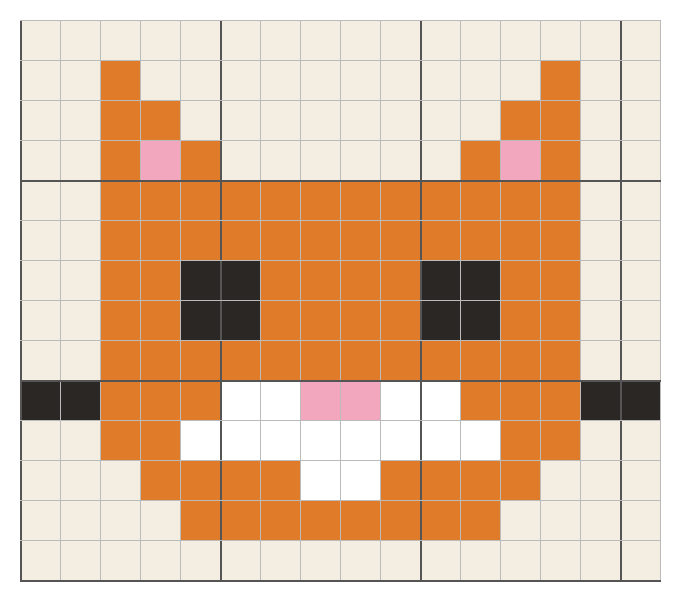
The frog is the widest chart in the series: 26 × 17 stitches and six colors. The eyes are the only real difficulty, white, black, white, with a small ball of yarn for each shade. The orange fish and the butterfly need fewer stitches. The butterfly, barely 16 × 11, makes a good keyring. The ginger cat head is 16 × 14 stitches and is best kept for a quiet evening.
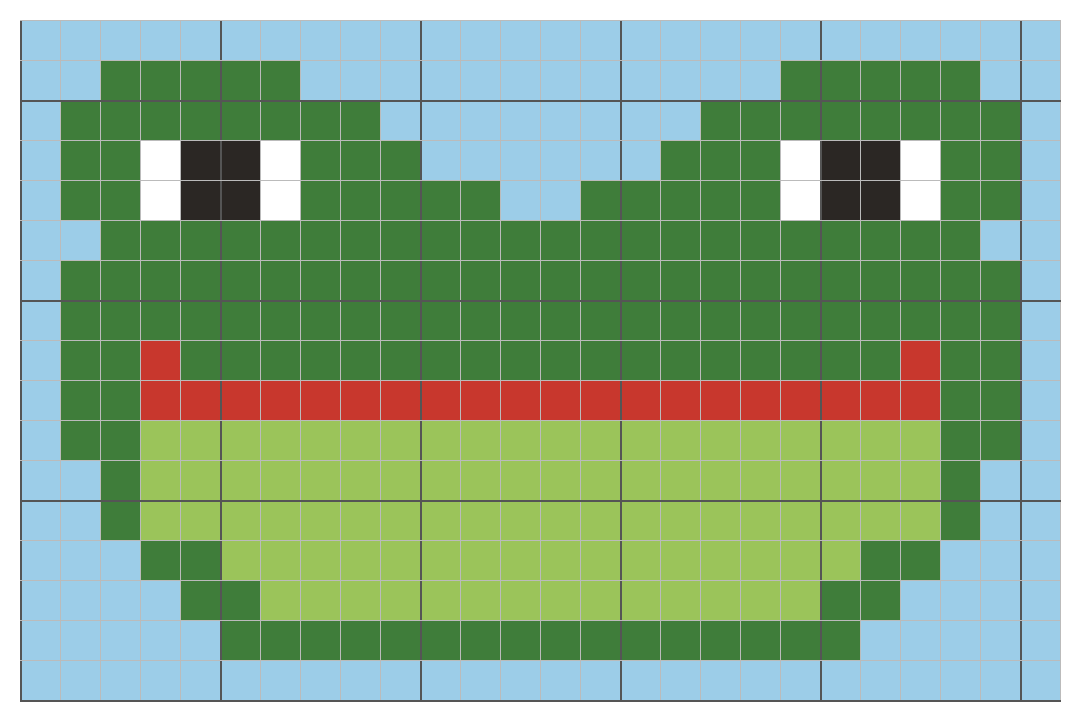
Frog crochet chart: free pattern
A green frog seen from the front, with round eyes and a wide red mouth, on a sky blue ground.
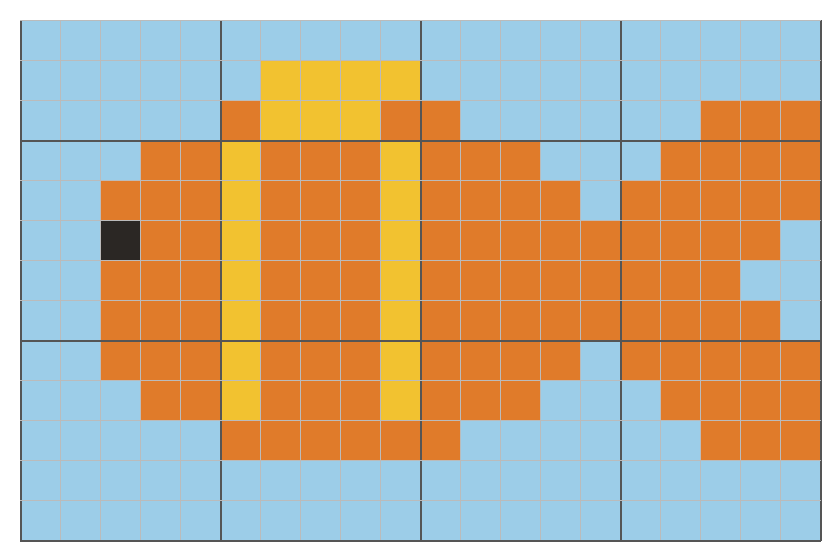
Orange fish crochet chart: free pattern
An orange fish with yellow stripes, a black eye and a fan-shaped tail, swimming left on a sky blue background.

Butterfly crochet chart: free pattern
An orange butterfly with yellow spots on its wings, a black body and two antennae.

Ginger cat face crochet chart: free tapestry pattern
A ginger cat with pink ears, in five colours of single crochet.
These four charts share one thing: a closed outline with no stray stitches, recognizable even from a distance. It is the test I apply before publishing a chart. If the motif cannot be read without its title, I redraw it.
Reading a tapestry crochet chart
Each square of the chart is one single crochet (US) stitch. You work from bottom to top, one row out, one row back, and you change color on the last loop of the previous stitch. The unused yarn is carried behind the work or, better, crocheted over inside the stitches. For isolated areas, like the frog’s eyes, a small separate ball avoids long strands that pull.
Choosing the yarn for the job
The same chart changes size with the yarn. Count about 0.5 cm per stitch in fine cotton, 0.6 cm in DK cotton and 0.8 cm in aran yarn. The 26-stitch frog is therefore 13 cm wide in fine cotton, but 21 cm in aran. For a keyring or a bookmark, stay with fine cotton and a 2.5 mm hook. For a cushion, move up to aran yarn and a 5 mm hook.
As for supplies, I start with aran yarn for cushions, then DK cotton for coasters. If you crochet for long stretches, an ergonomic 5 mm hook really does ease the wrist.
One last tip: always work a few test rows to check your tension. A 20-stitch chart that measures 14 cm instead of 12 is a cushion that no longer fits its cover.
Amazon links are affiliate links: a purchase may earn us a commission at no extra cost to you.