I have been crocheting landmarks since I wanted a travel souvenir without a suitcase: one chart, one yarn, one afternoon. This month I gathered six buildings from our catalog, from the pagoda to the lighthouse, including the pyramid I have just published. They are general shapes with no architect’s detail, easy to recognize even on a chart only 13 stitches wide.
Three tall silhouettes to warm up
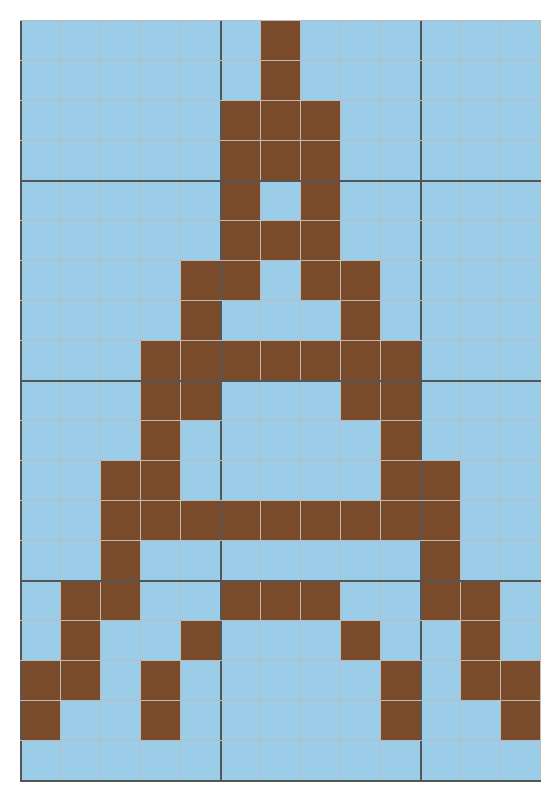
The lighthouse, the Eiffel Tower and the pagoda have one thing in common: they go up. The Eiffel Tower is only 13 × 19 stitches in two colors; it is the quickest, ideal as a bookmark. The lighthouse is 16 × 24 stitches in five colors: change color at the end of the row and carry the yarn behind the work without pulling it. The pagoda is wider, 24 × 26 stitches: plan a whole evening and count your rows in fives, like the grid lines on the chart.
These three charts have one advantage: their silhouettes are narrow enough for the carried yarn to stay short. On a tall building, a yarn that crosses more than five stitches ends up sagging; cut it instead and weave in the ends at the back. I always work a small tension swatch of five stitches before starting, because fine cotton and DK cotton do not behave the same way.
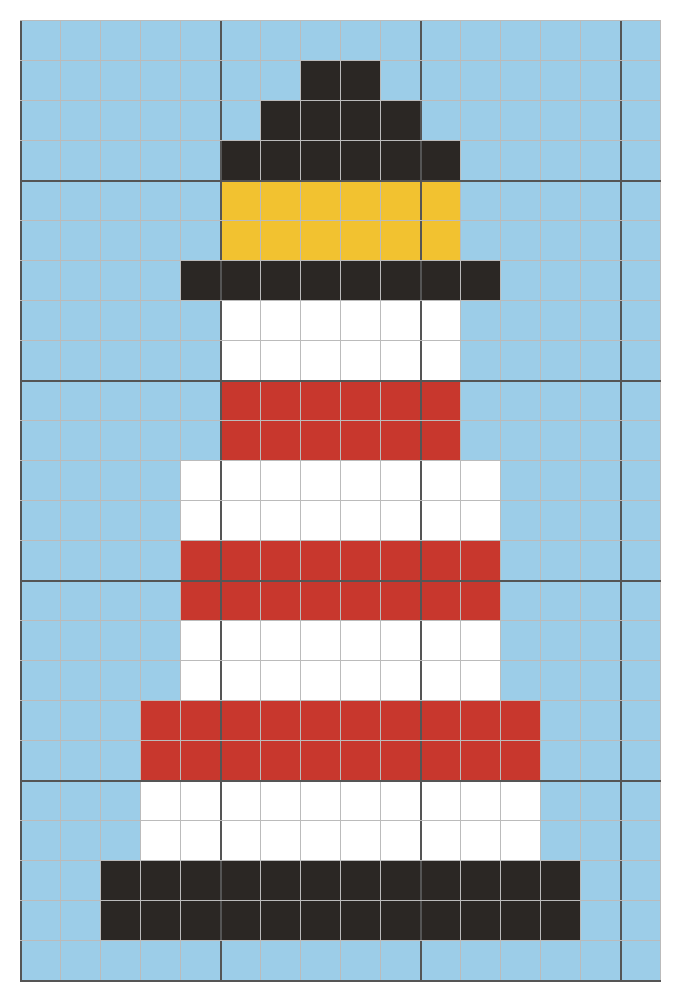
Lighthouse crochet chart: free pattern
A red and white striped lighthouse with a yellow lantern, a black roof and a dark base.

Eiffel Tower crochet chart for a bookmark
The Eiffel Tower silhouette in two colours, tall and narrow.
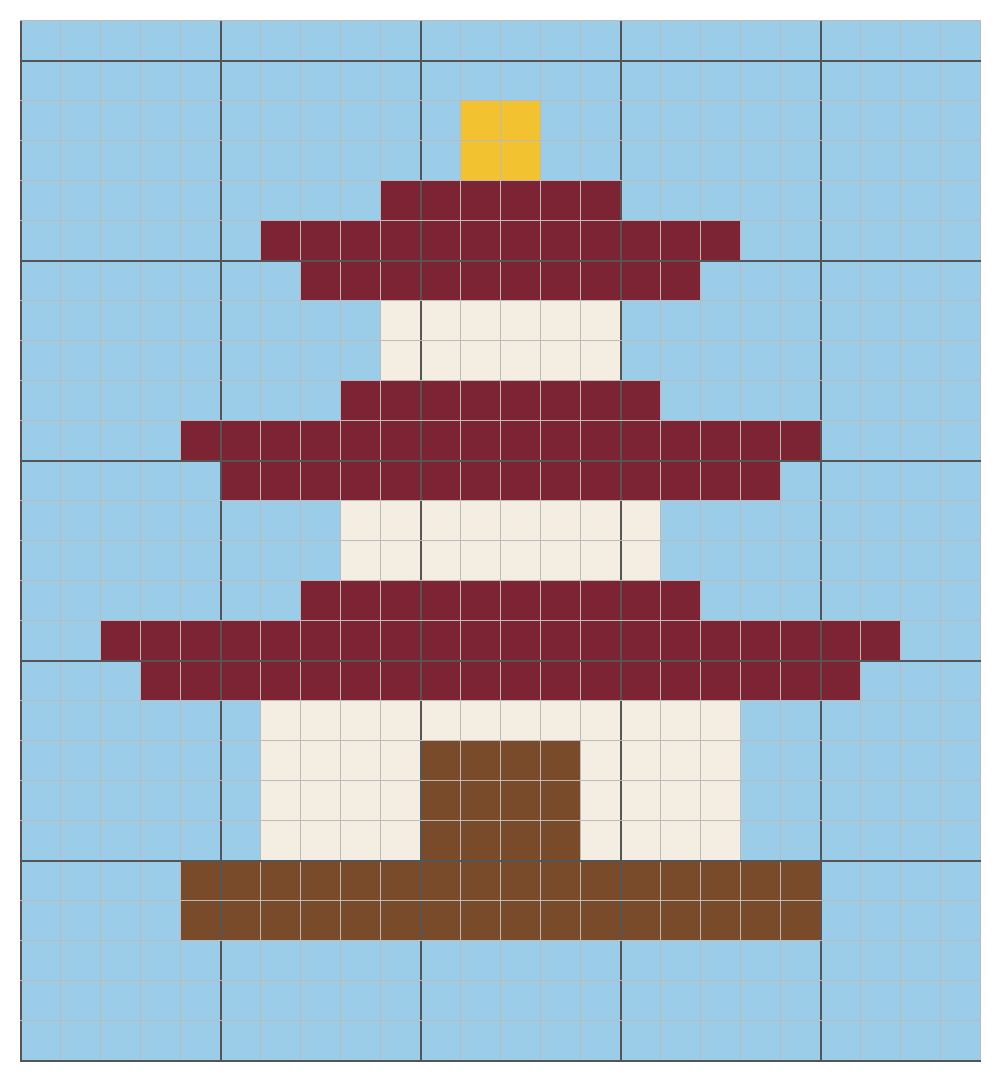
Pagoda crochet chart: free pattern
A pagoda with three burgundy roofs with upturned edges, topped by a yellow spire, on a sky blue ground.
Castle, half-timbered house and pyramid
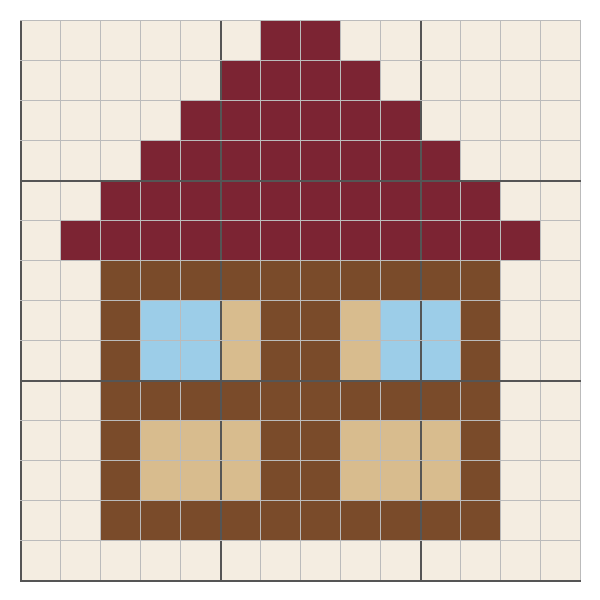
The castle (21 × 16 stitches, four colors) is worked in pearl grey and poppy red: the battlements need some attention, but the color areas are large. The half-timbered house is the smallest of the six, 14 × 14 stitches: it is the chart I suggest to beginners, because it takes a few hours. As for the pyramid, 24 × 18 stitches, it plays on two faces, one sunlit and one in shade; the line between them stays on the same column, which makes counting easy.
If you hesitate, start with the half-timbered house, then the castle, and keep the pyramid for last: it will tell you fastest whether your tension is even, because its large color areas do not forgive a row worked too tight. And if the yellow looks too bright, nothing stops you from choosing a beige instead: the pattern pages are there to guide you, not to impose a color.
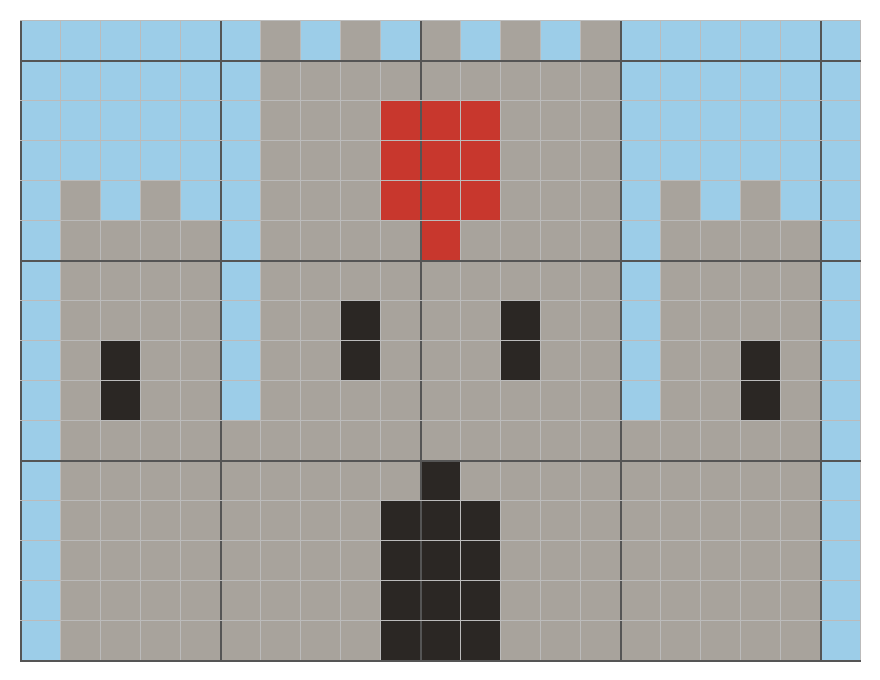
Castle crochet chart: free pattern
A pearl grey castle with three crenellated towers, a black gate and a red banner, against a blue sky.

Half-timbered house crochet chart: free pattern
A Normandy-style house with a burgundy roof, beams and windows included.
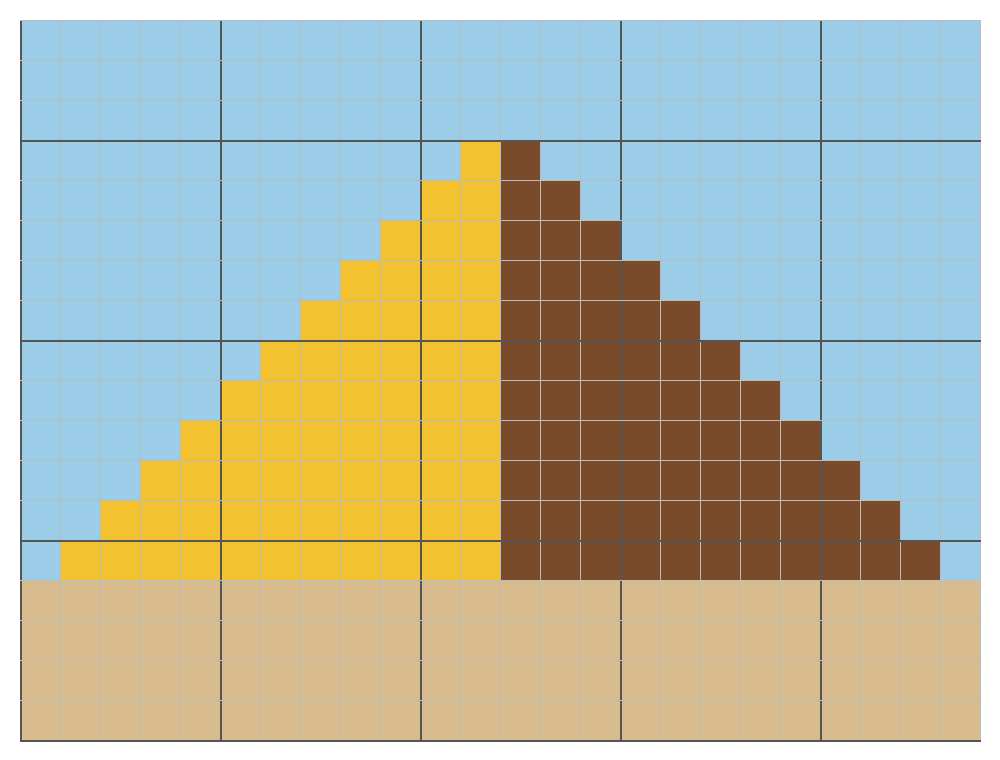
Pyramid crochet chart: free pattern
An Egyptian pyramid with a sunlit yellow face and a shaded brown face, standing on sand under a blue sky.
Yarn, hook and a garland idea
For the small charts, fine cotton and a 2.5 mm hook give a crisp result, at about 0.5 cm per stitch. For the pyramid or the pagoda I prefer DK cotton with a 3.5 mm hook: expect 0.6 cm per stitch. Stitch markers help you spot every fifth row, especially on the tall charts.
Each chart is read from bottom to top, one row going, one row coming back. This is tapestry crochet in single crochet (US), which is double crochet in UK terms. Once finished, the six pieces can be sewn onto a strip of felt to make a travel garland to hang near a window. Just pick a common background, such as sky blue, so the set stays consistent.
Amazon links are affiliate links: a purchase may earn us a commission at no extra cost to you.