Changing color is the move that makes most people hesitate in tapestry crochet. For the four charts published today, I wanted a different exercise each time: diagonal stripes, a spiral, small isolated patches and a ring. I worked them all in the same cotton so I could compare, and here is what I learned from each.
Carry the yarn or switch balls
In tapestry crochet, you work every single crochet (US) in the color of the square. The yarn you are not using stays hidden behind the work, under the stitches. There are two methods, and the choice depends on how far away the color comes back.
When a color returns within the next five stitches, carry it: the yarn travels behind without being pulled tight. Beyond that, cut it or use a small separate ball for the area. Yarn carried too far puckers the fabric and shows on the wrong side. So I follow a simple rule: no more than five stitches carried, otherwise a separate ball. Also remember to read the chart from the bottom up, one row out, one row back: the reading direction flips every row, and that is where mistakes creep in.
Four motifs, four techniques
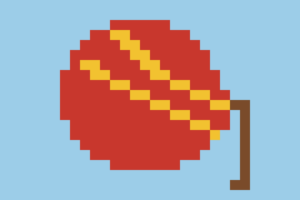
The candy cane (18 × 24 stitches, 3 colors) trains you on diagonal stripes. Red and white alternate about every three stitches: carry the yarn over three stitches at most, and the fabric stays flat. It is the narrowest of the four, so the quickest to finish, about 70 minutes.
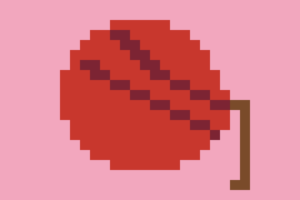
The snail (24 × 18 stitches, 5 colors) teaches the spiral. Brown comes back several times in the same row, separated by orange: a small ball per area avoids long floats. Allow 70 minutes, and keep the four black stitches of the eye for last.
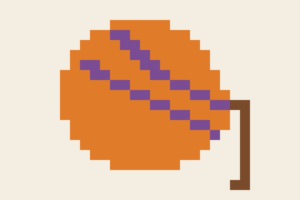
The lemon (24 × 20 stitches, 5 colors) brings together small orange patches and a green leaf that hangs on only a few stitches. It is the tension exercise: tighten up a little around the leaf. Expect about 80 minutes in DK acrylic yarn.
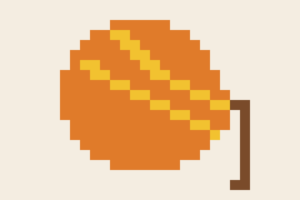
The doughnut (24 × 24 stitches, 4 colors) teaches the ring. The center hole forces a yarn change on every row, with nothing carried: cut the yarn and weave the ends in at the back. It is the longest, about 95 minutes, but also the nicest as a coaster.
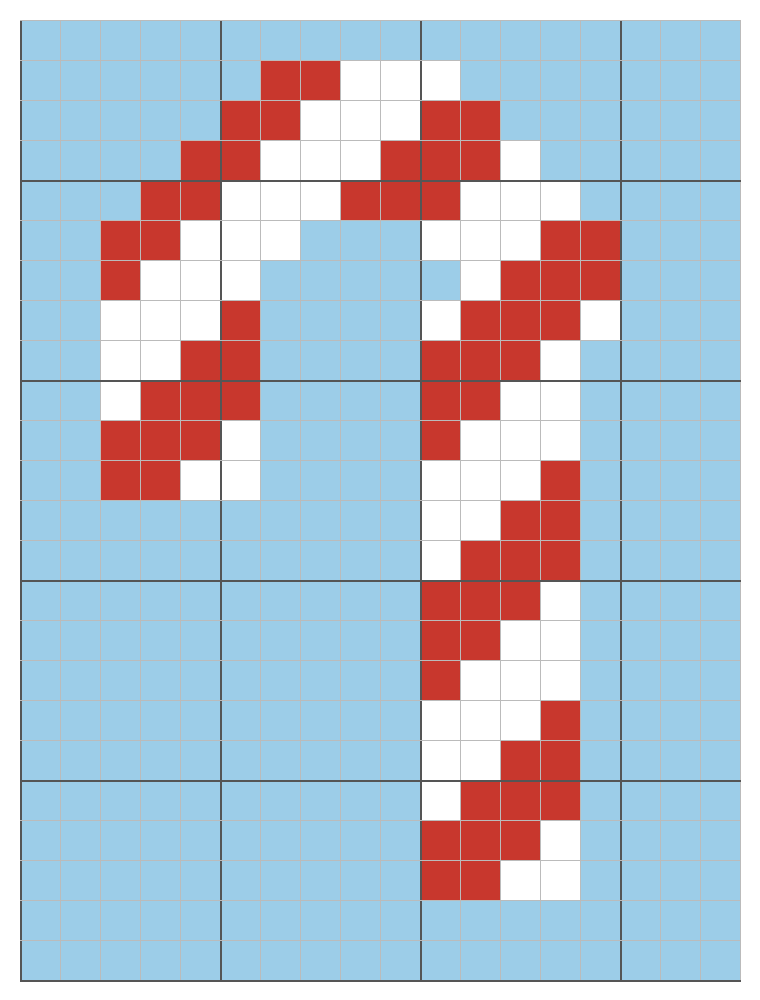
Candy cane crochet chart: free pattern
A red and white striped candy cane with its hook turned to the left, on a sky blue ground.
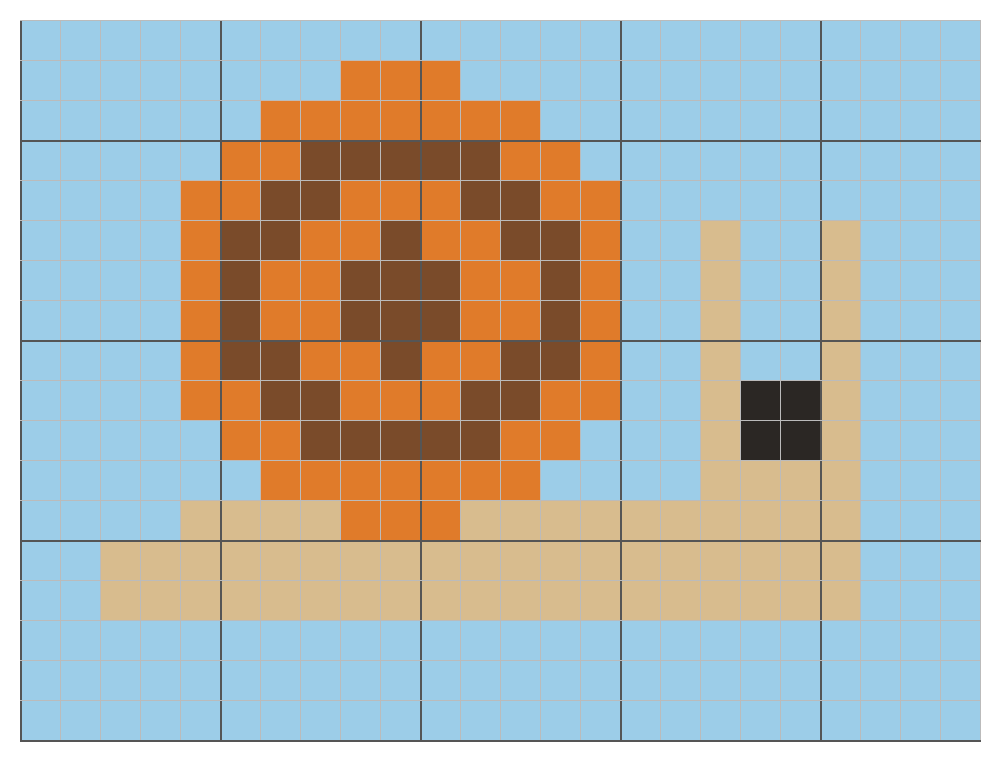
Snail crochet chart: free pattern
A snail with an orange shell spiraled in brown, a sand beige body and two antennae, on a sky blue ground.
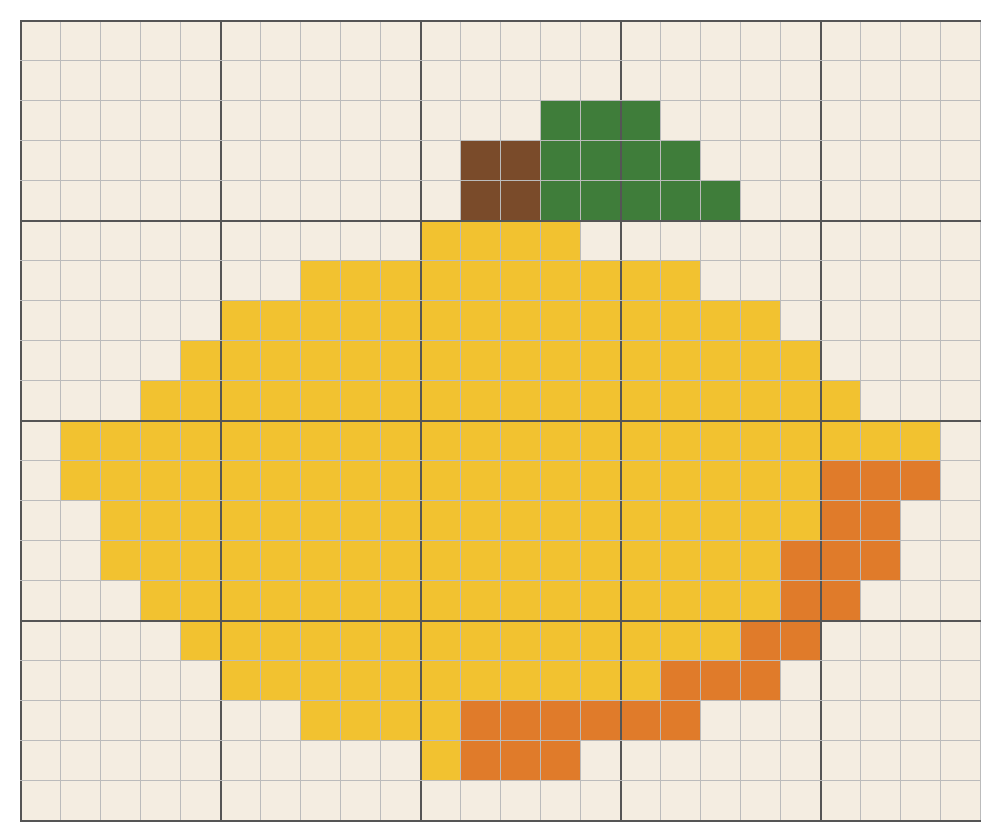
Lemon crochet chart: free pattern
A yellow lemon with two pointed ends, shaded in orange, with a brown stem and a green leaf.
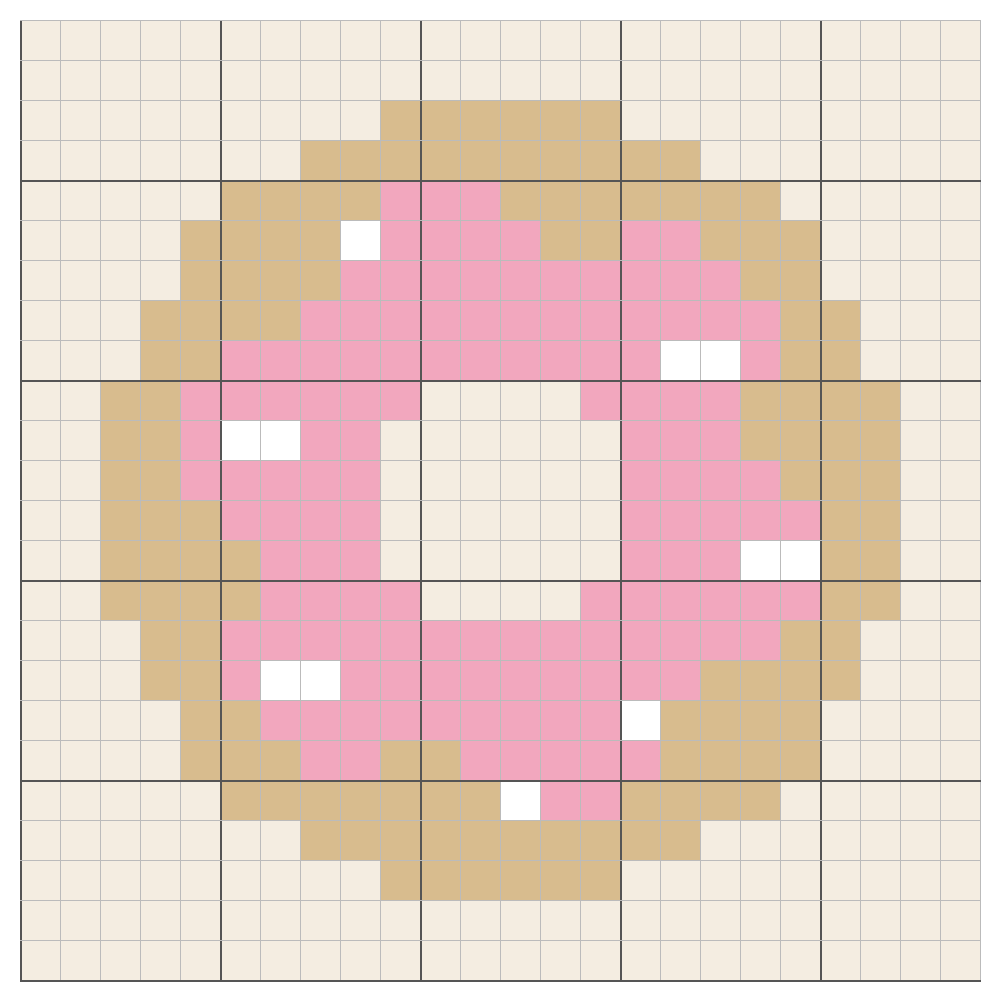
Doughnut crochet chart: free pattern
A round doughnut with sugar pink icing over a sand beige dough, sprinkled with white sprinkles.
Gear that makes color changes easier
A mercerized DK cotton glides well and splits little: it is the one I pick for stripes. With an ergonomic 3.5 mm hook, your tension stays even over several hours. For small color areas, a few stitch markers help you spot the start of each motif without recounting. A little patience does the rest: redo the first two or three rows if the fabric ripples, it is better than pressing on.
The order I would work them in
Start with the candy cane, to get used to stripes on a narrow chart. Then move on to the doughnut and the snail, and keep the lemon for last: its leaf needs careful tension. In two evenings, you will have four matching pieces, and changing colors will no longer worry you.
Amazon links are affiliate links: a purchase may earn us a commission at no extra cost to you.