When you have one evening ahead of you, a thirty-row chart is rarely what you want. Here are four patterns added to the catalog this week, all tested by me: none is wider than twenty stitches, and each fits a small project.
A candy for the season
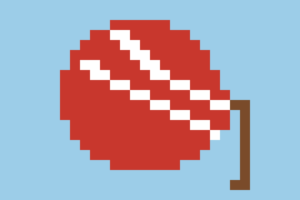
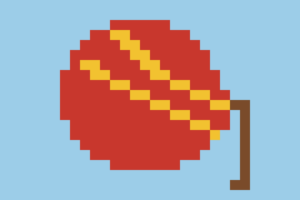
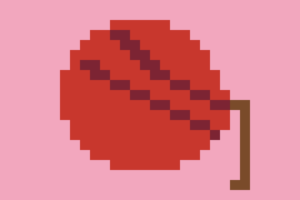
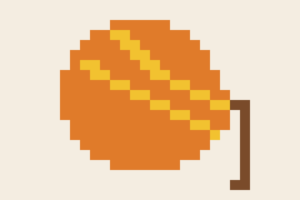
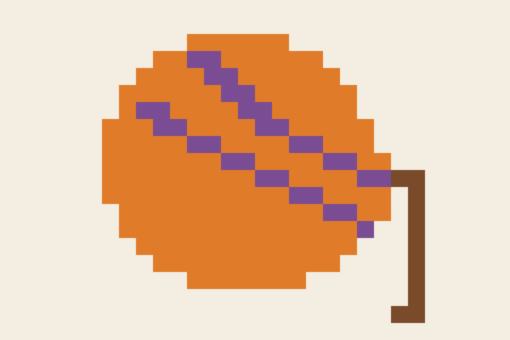
The Halloween candy is the quickest of the four: just three colors, orange, plum and ecru. It makes a pretty garland if you crochet five or six, or a small decoration for a shelf.
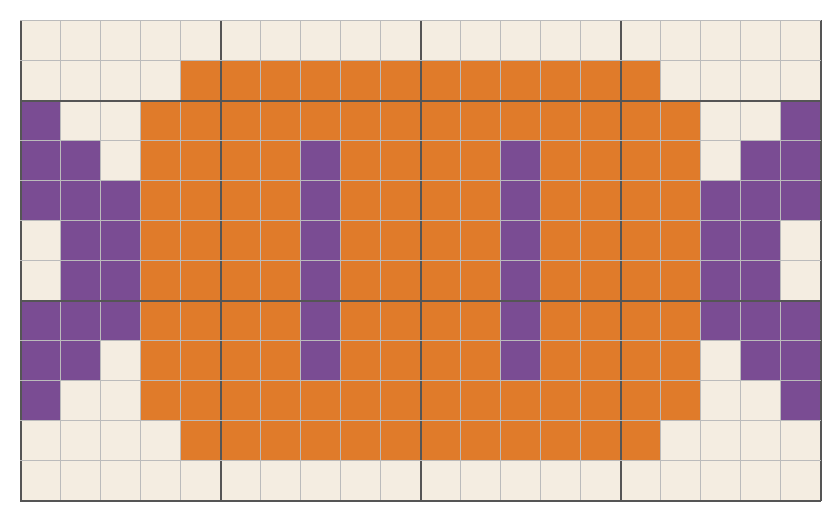
Halloween candy crochet chart: free pattern
A pumpkin-orange wrapped candy with plum twisted ends, easy to spot at a glance.
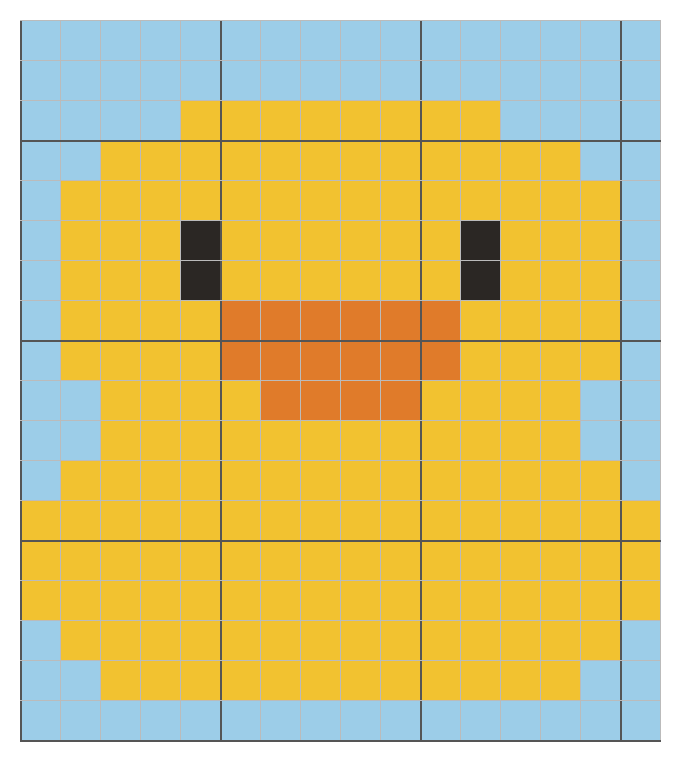
Yellow duck crochet chart: free pattern
A yellow duck seen from the front, with an orange beak and two well-spaced black eyes.
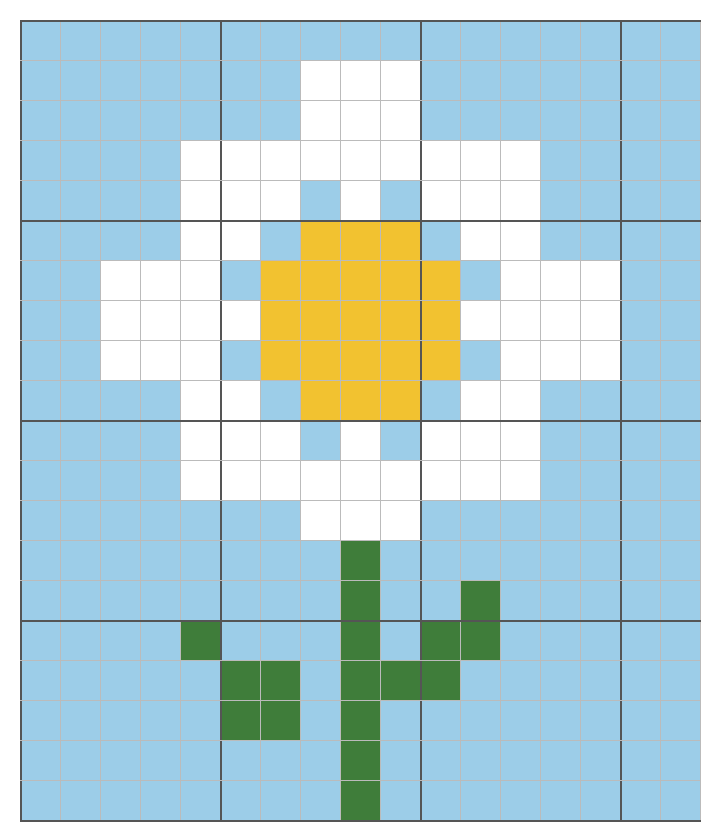
White daisy crochet chart: free pattern
A white daisy with a yellow center on a green stem, with two leaves, on a sky blue background.
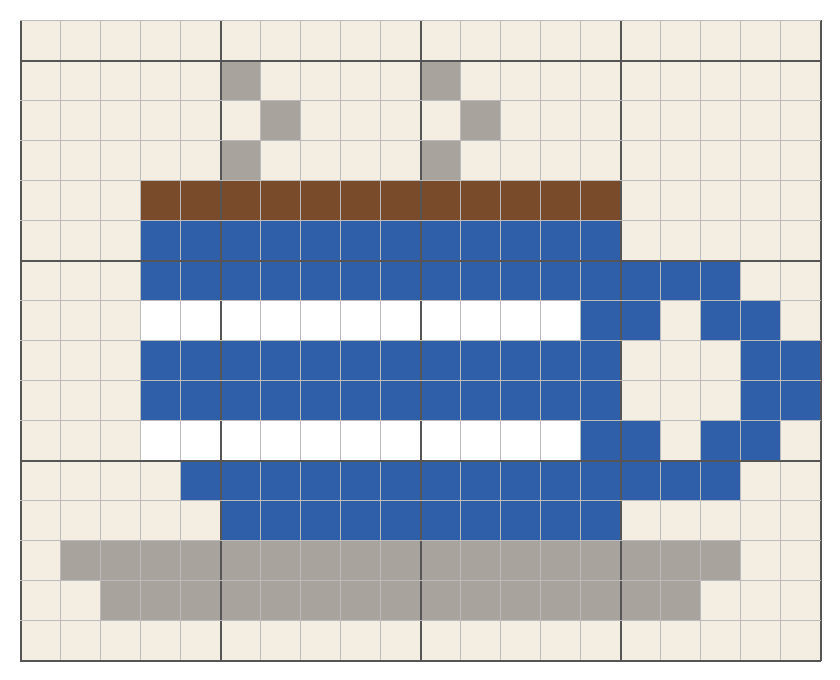
Coffee cup crochet chart: free pattern
A blue cup with white stripes on a grey saucer, with two wisps of steam rising from the coffee.
A duck and a daisy for everyday use
The yellow duck and the daisy are worked in DK cotton with a 3.5 mm hook. They make good bookmarks or coasters, and the tension stays comfortable: about 0.6 cm per stitch. For the duck, start with the body and keep the orange beak for last. For the daisy, the stem is only one stitch wide: tighten your yarn a little on those rows.
If you are new to tapestry crochet, these two charts are a good testing ground. Color changes are rare and the yellow areas are big enough that the yarn carried behind the work does not pull.
A cup for the tea set
The coffee cup is the busiest of the four, with five colors. The white stripes need a little care: carry the white behind the work across the width of the cup, then cut the yarn before the handle. That way you avoid a loop that snags.
For these four pieces I use cotton at times and acrylic at others. Cotton holds its shape and gives sharper outlines; acrylic is softer and washes without fuss. Here is what I usually look for: a 3.5 mm hook for cotton, a 4 mm hook for acrylic, and a few balls of DK cotton in the colors of the chart.
If you plan to give them away, slip in a small card with the yarn name and hook size: whoever receives a handmade coaster likes to know how to care for it. Cotton washes at thirty degrees, and so does acrylic, dried flat.
How to read these charts
Every chart in the catalog is read from bottom to top, one row going, one row coming back. One square is one single crochet (US), which is a double crochet in UK terms. The darker lines every five rows and every five stitches help you keep count.
Each pattern page lists the color counts taken from the chart itself, so you know beforehand how many stitches of each color are waiting for you, and whether one ball will be enough. If you are torn between two yarns, work a small ten-stitch square before you commit.
Whatever the motif, always leave a tail of about fifteen centimeters at each color change, so you can weave in the ends neatly. It is a small detail, but it matters on a coaster that will be used every day.
Amazon links are affiliate links: a purchase may earn us a commission at no extra cost to you.