The pirate theme suits tapestry crochet very well: few colours, bold silhouettes and big flat areas. I have gathered five charts from the catalogue, from the compass published today to the black and white flag. In one weekend you can work all five and turn them into coasters, bookmarks or a small garland.
Five objects, one logic
A pirate is recognised by the gear. Here are the five I picked: the compass, the ship’s wheel, the treasure chest, the anchor and the black and white flag. Each chart is a map of single crochet (US) stitches, one square for one stitch. Read it from the bottom up, one row out, one row back, and the motif stays readable at first glance.
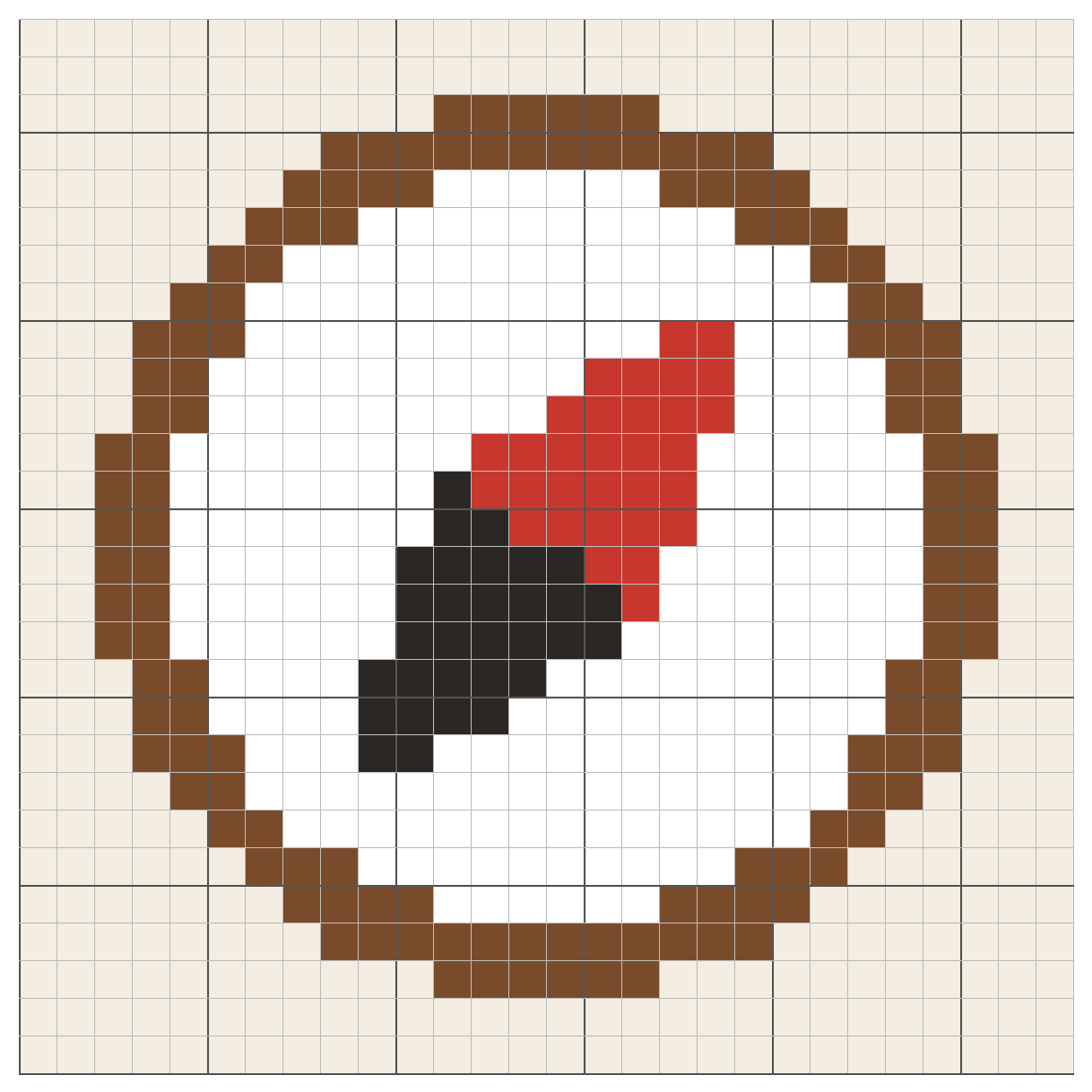
Compass crochet chart: free pattern
A compass with a brown case and a white dial, its red and black needle pointing to the upper right corner.
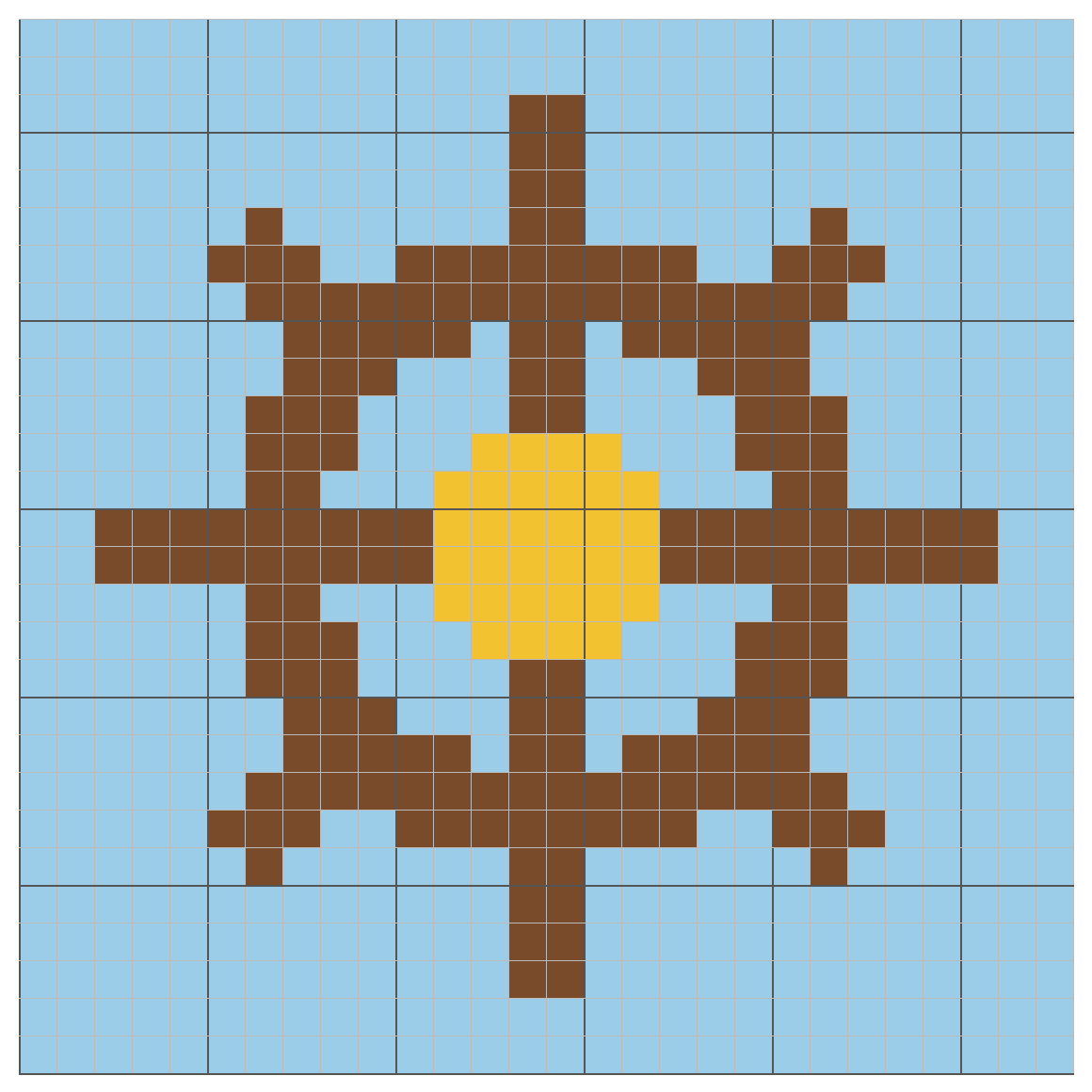
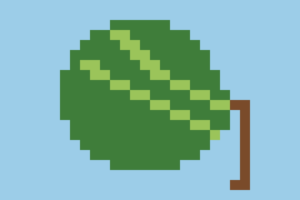
Pirate ship wheel crochet chart: free pattern
A brown ship’s wheel with eight handles and a yellow hub, standing on a sky blue ground.
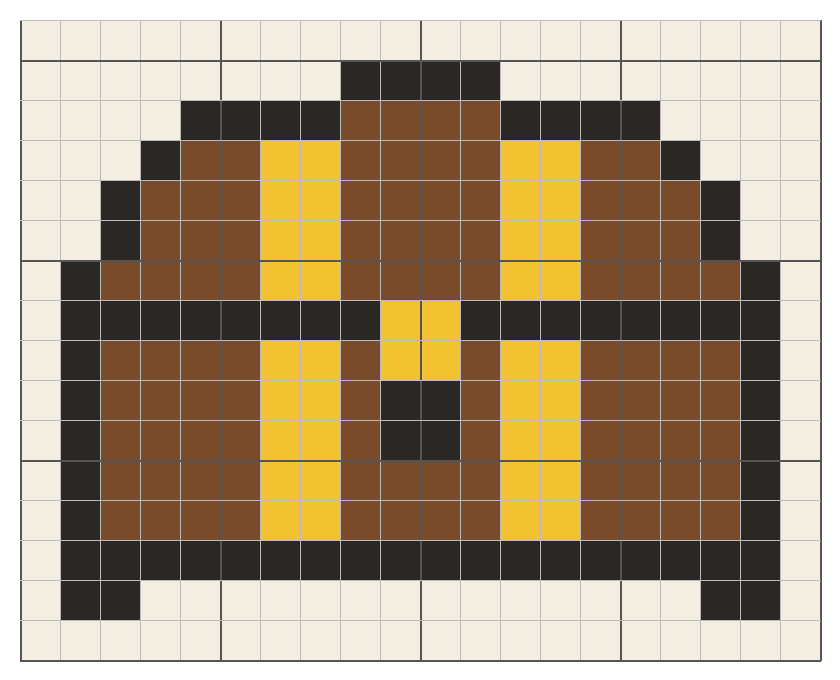
Treasure chest crochet chart: free pattern
A brown wooden chest with a domed lid, banded in gold and closed with a padlock.
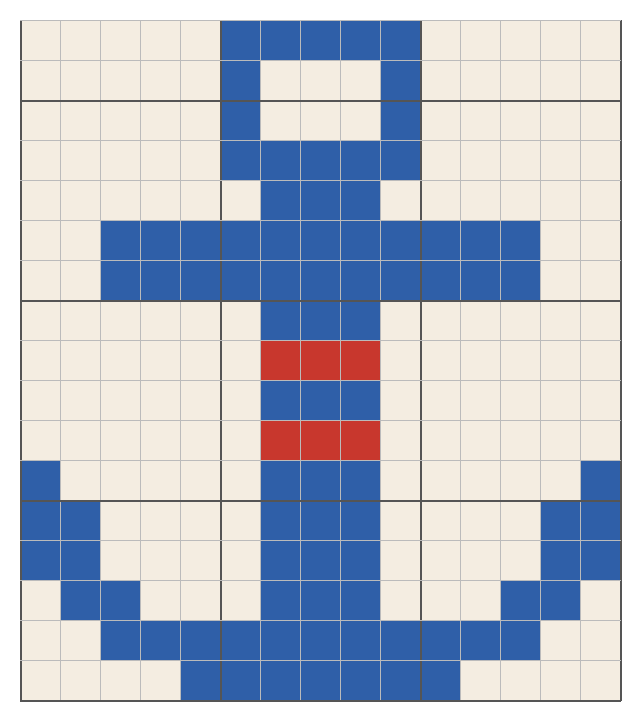
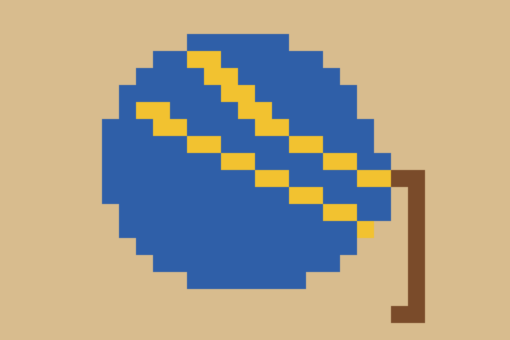
Anchor crochet chart: free pattern
A blue anchor with a ring, a crossbar and curved arms, with two red rope bands on the shank.

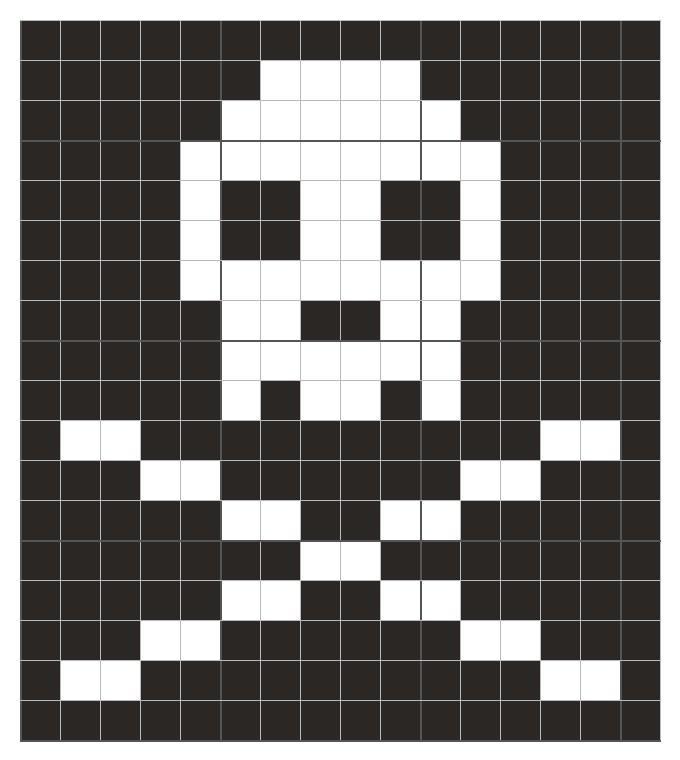
Pirate flag crochet chart in black and white
A skull and crossbones in black and white.
Where to start
If you are new to it, take the flag: it is 16 × 18 stitches with only two colours, and the anchor is 15 × 17 stitches with three. Both work up in one evening with DK cotton and a 3.5 or 4 mm hook. The treasure chest, at 20 × 16 stitches and four colours, asks for a little more care at the corners of the lid.
The compass and the wheel are bigger: 28 × 28 stitches each, in chunky yarn. Expect about 28 cm across with a 6 mm hook. I see them more as a cushion or a small throw than as a coaster.
Putting the five together
Once the charts are done, weave in the ends, then dampen each piece lightly and let it dry flat: the edges straighten and the motifs settle into shape. For a garland, sew a small loop of chain stitches at the top of each piece and thread them onto a jute string. For coasters, simply back the piece with a square of felt cut to size.
Keep the same background colour on all five pieces. It is what gives the set its look of belonging together, even when the sizes differ.
Yarn and colours
For the small charts, DK cotton gives neat stitches and a firm fabric that does not gape when you carry the yarn behind. A DK cotton in ecru, black, red and blue is enough to get going. For the two large ones, choose a chunky yarn and the matching hook; my tension tightens a little with that yarn, so I always work a swatch first.
Also think of a few stitch markers: placed every five rows, they save you from recounting the chart when you pick the work up the next day.
On all five motifs, the yarn you are not using travels behind the stitches. Crochet over it to hide it, but never carry it across more than three or four stitches: beyond that it pulls and puckers the fabric. For big blocks, like the dial of the compass, use a separate ball instead. The back stays tidy and the piece folds well.
Amazon links are affiliate links: a purchase may earn us a commission at no extra cost to you.