When people write to ask me “which yarn for this chart?”, I always answer with another question: what size do you want to end up with? In tapestry crochet, one square of the chart is one single crochet (US) stitch, and the yarn decides how wide it is. Here are my four usual combinations, with charts from the catalogue that I have worked in each of them.
Fine cotton and a 2.5 mm hook: the small format
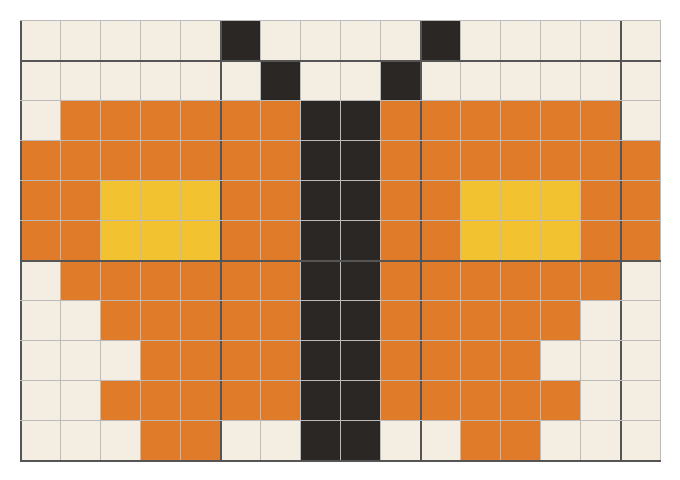
With fine cotton, a stitch measures about 0.5 cm. A chart 16 stitches wide therefore comes to 8 cm: the ideal size for a bookmark or a keyring. The work is fiddly but quick to finish. I take fine cotton and a 2.5 mm hook and stitch firmly, so the ground does not show between stitches. Try the red rose, the old key or the butterfly.
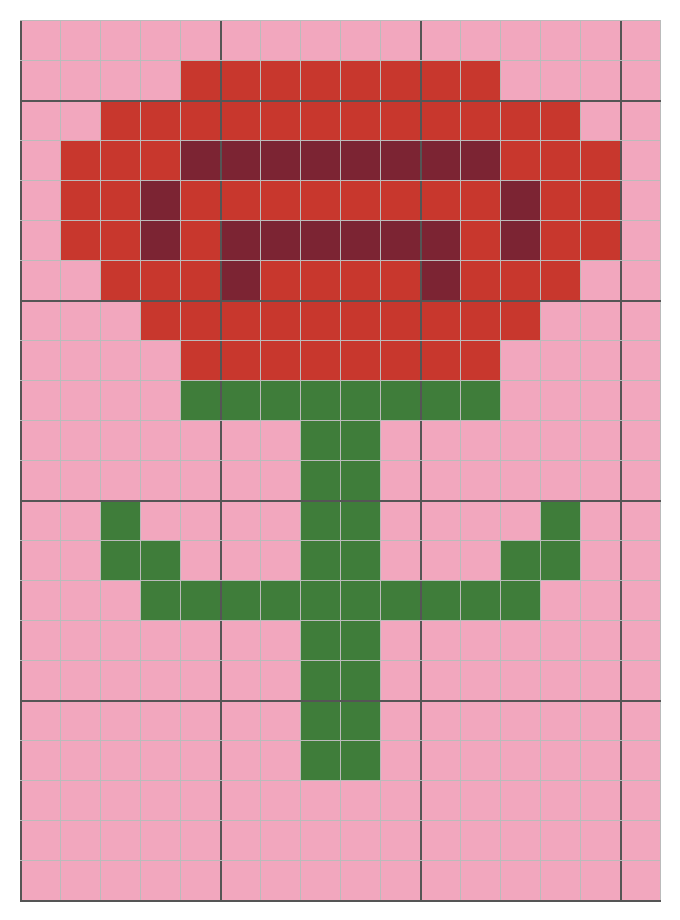
Red rose crochet chart: free pattern
A red rose with a burgundy swirl at its heart, on a green stem with two leaves and a sugar pink background.
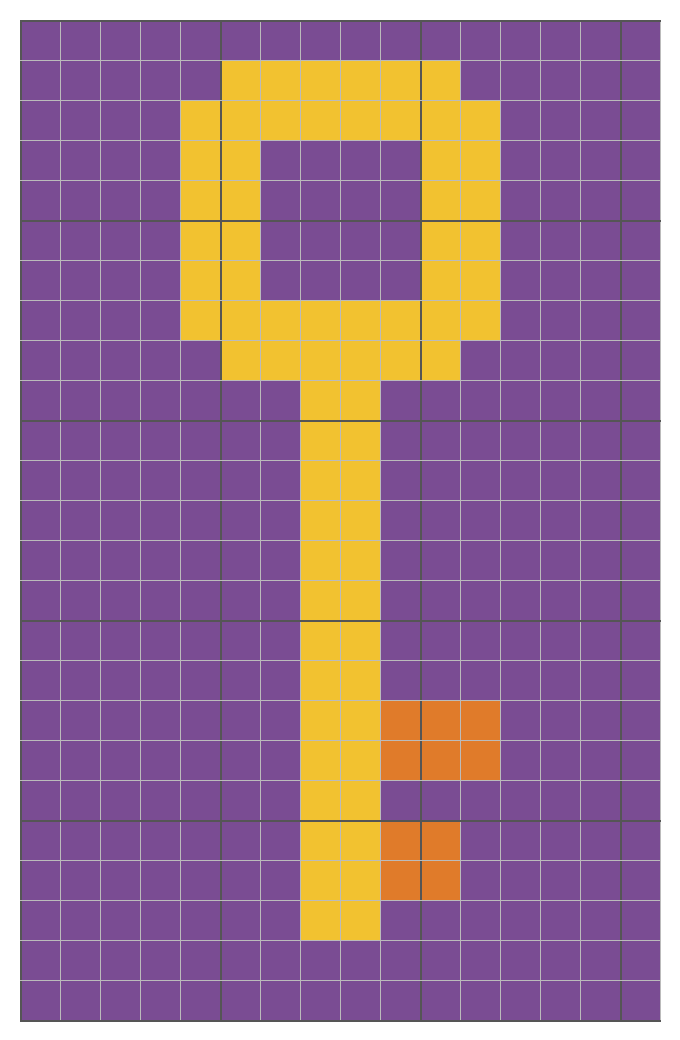
Antique key crochet chart: free pattern
A yellow antique key with a rounded bow and orange teeth, on a plum purple Halloween night background.

Butterfly crochet chart: free pattern
An orange butterfly with yellow spots on its wings, a black body and two antennae.
DK cotton and a 3.5 mm hook: crisp coasters
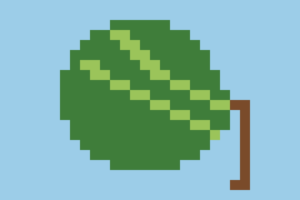
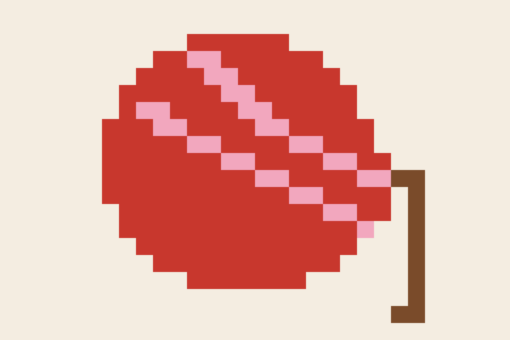
DK cotton gives about 0.6 cm per stitch. A 22-stitch chart fits a 13 cm square: exactly one coaster. Cotton is firm and washable, and it keeps the shape of the motif. I recommend a tightly twisted DK cotton that does not split when you carry the yarn behind. For the cherries, the walnuts or the snail, change colour on the last pull-through of the previous stitch.
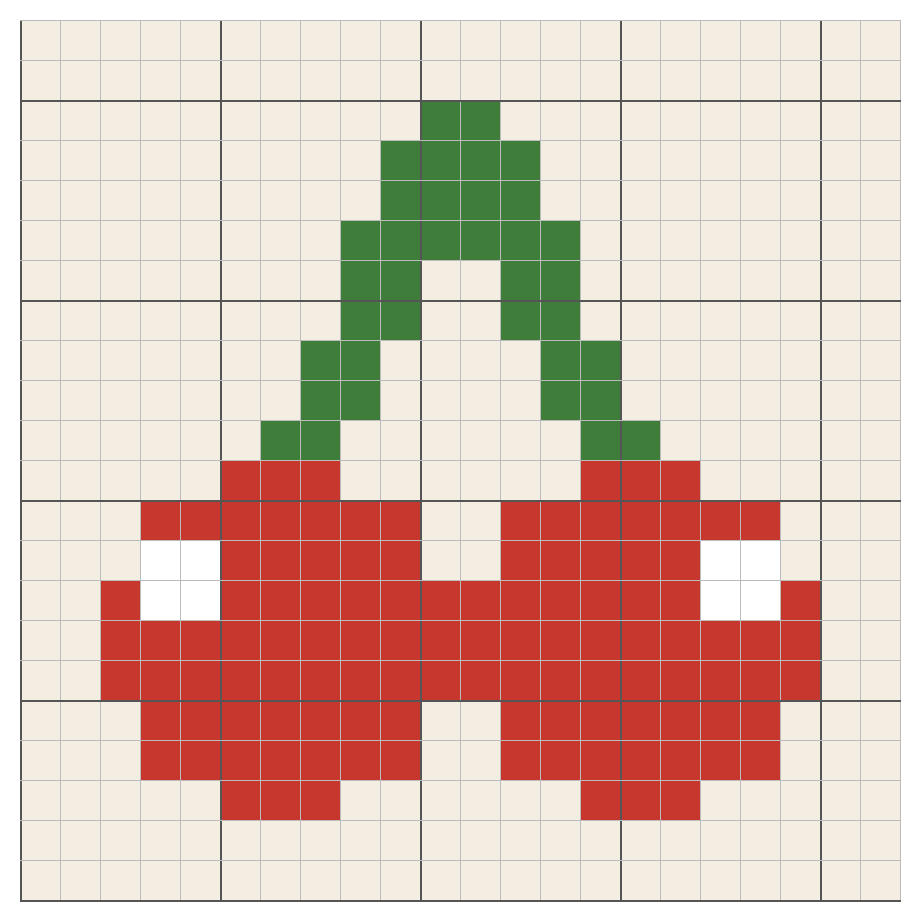
Cherries crochet chart: free pattern
Two red cherries with white highlights joined by two green stems in a V, on an ecru ground.
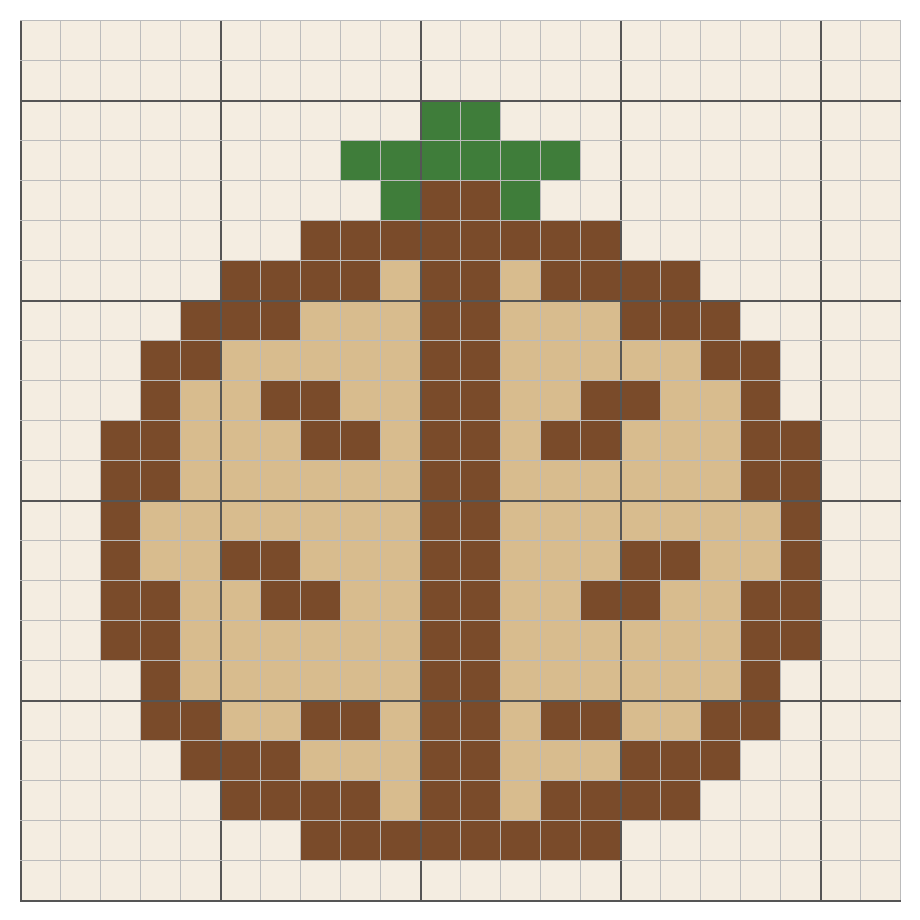
Walnut crochet chart: free pattern
A sand-coloured walnut with a round shell, split by a brown ridge and topped with a small green leaf.
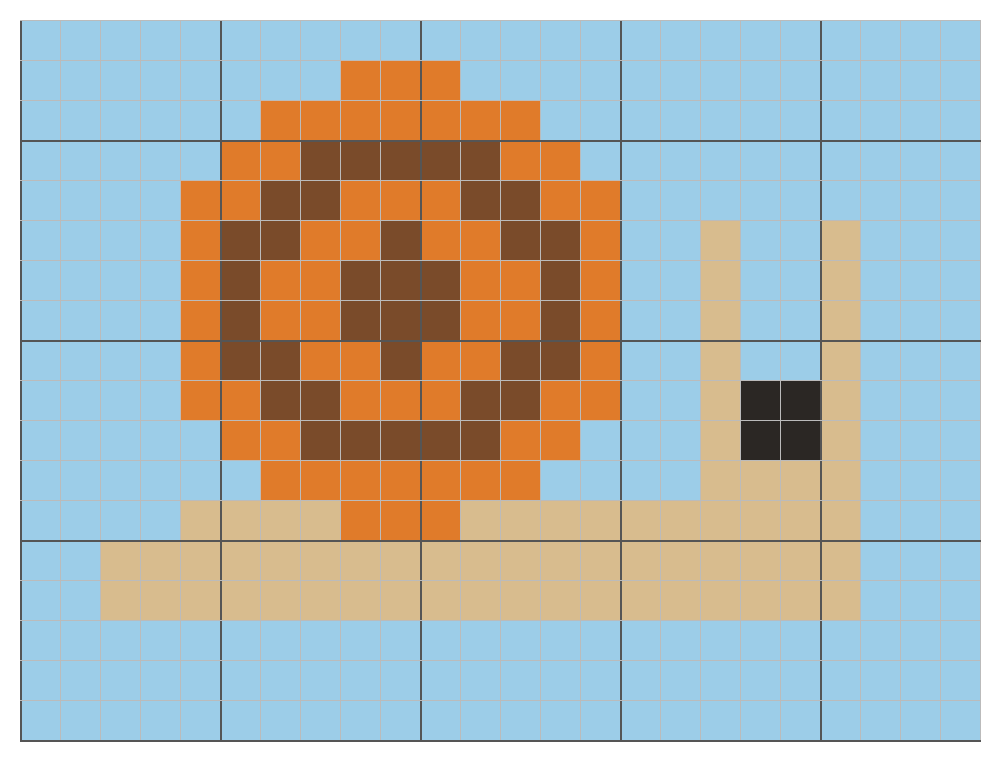
Snail crochet chart: free pattern
A snail with an orange shell spiraled in brown, a sand beige body and two antennae, on a sky blue ground.
DK acrylic and a 4 mm hook: easy decoration
DK acrylic is cheap and machine washable. With a 4 mm hook, 24-stitch charts come to about 14 cm: enough to dress a shelf or a Christmas tree. The bright acrylic colours render Christmas reds and greens well. Place a stitch marker every five rows, like the guide lines on the chart.
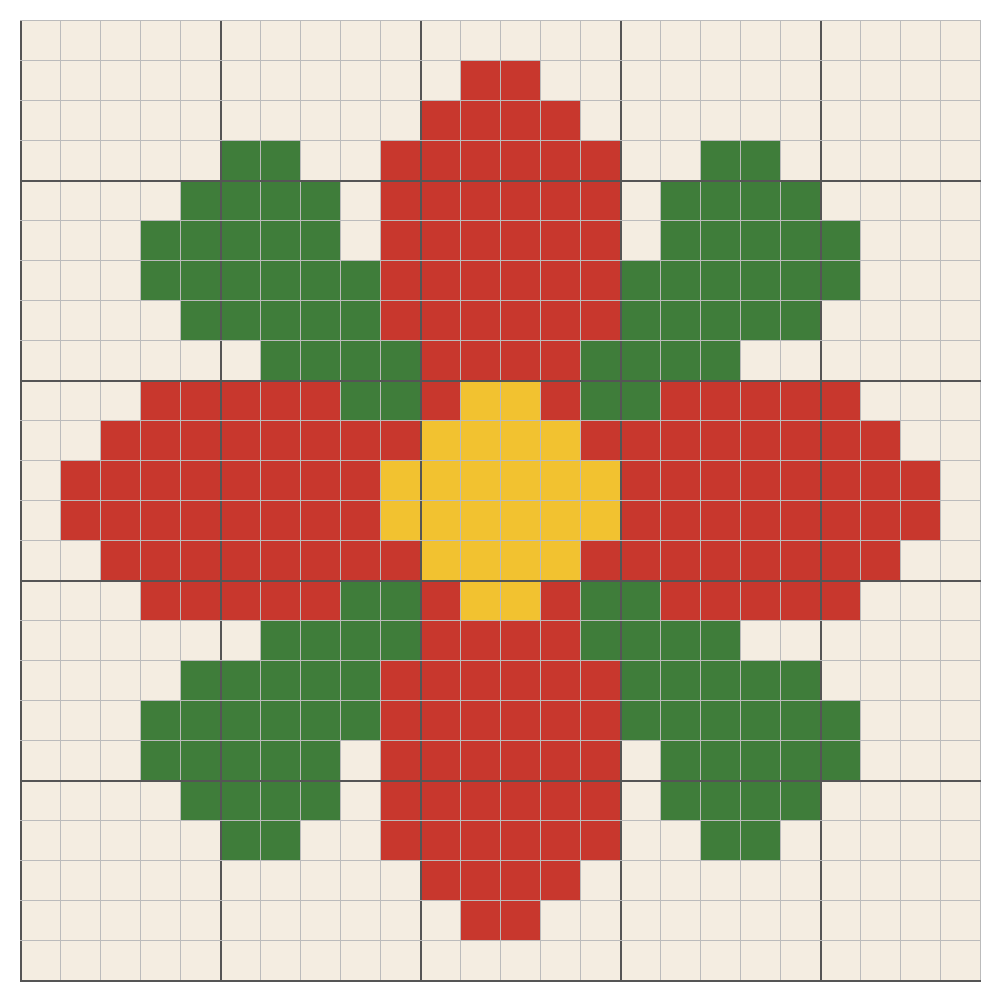
Poinsettia crochet chart: free pattern
A red Christmas poinsettia with a yellow centre and four fir-green leaves on an ecru ground.
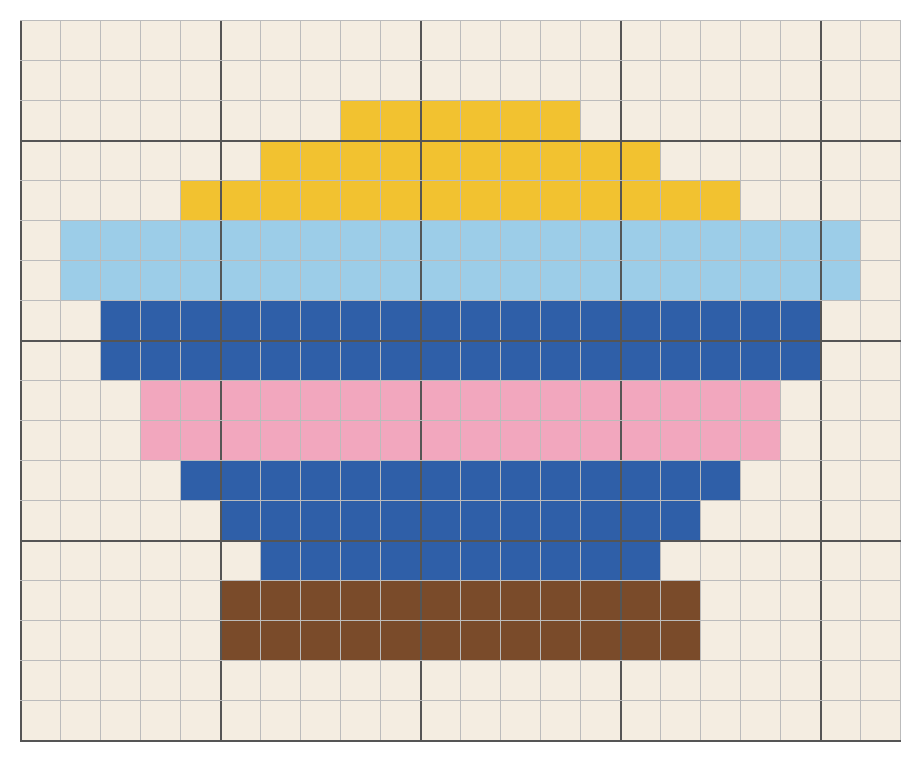
Baking bowl crochet chart: free pattern
A blue mixing bowl with a sky-blue rim and a pink band, filled with yellow batter, on an ecru ground.
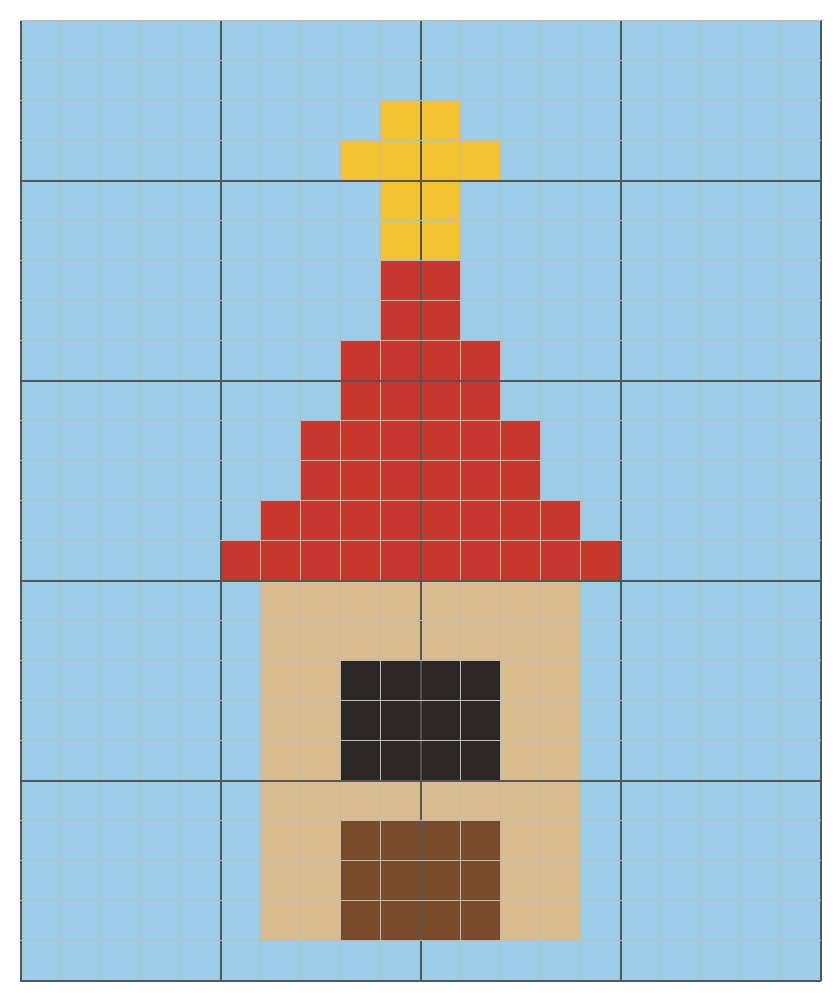
Church steeple crochet chart: free pattern
A church steeple with a red spire topped by a yellow cross, a black window and a brown door.
Aran and chunky yarn: cushions and large formats
In aran yarn with a 5 mm hook, a stitch measures 0.8 cm; in chunky yarn with a 6 mm hook, it nears 1 cm. A 22-stitch chart then gives 18 cm, and a 26-stitch chart more than 25 cm: a small cushion or a wall hanging. Rows are slower, but the motif reads from far away. I choose a soft aran yarn so the solid areas do not gape.
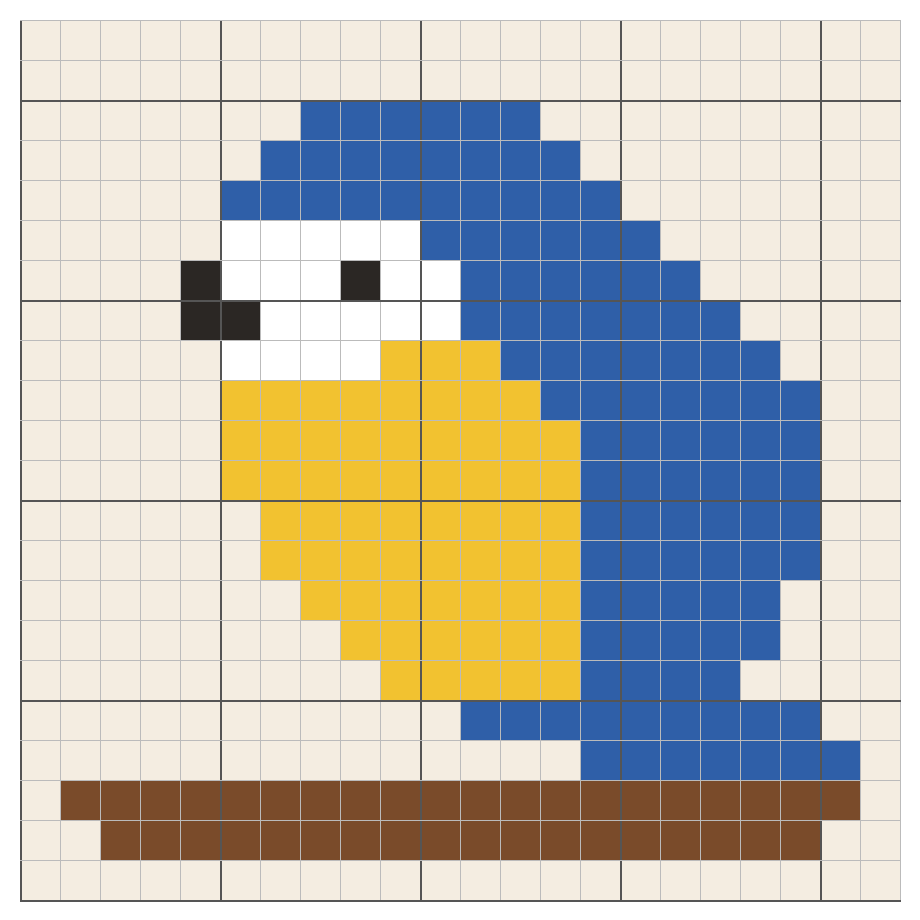
Blue tit crochet chart: free pattern
A blue tit in profile with a blue cap, white cheek and yellow belly, perched on a brown branch.
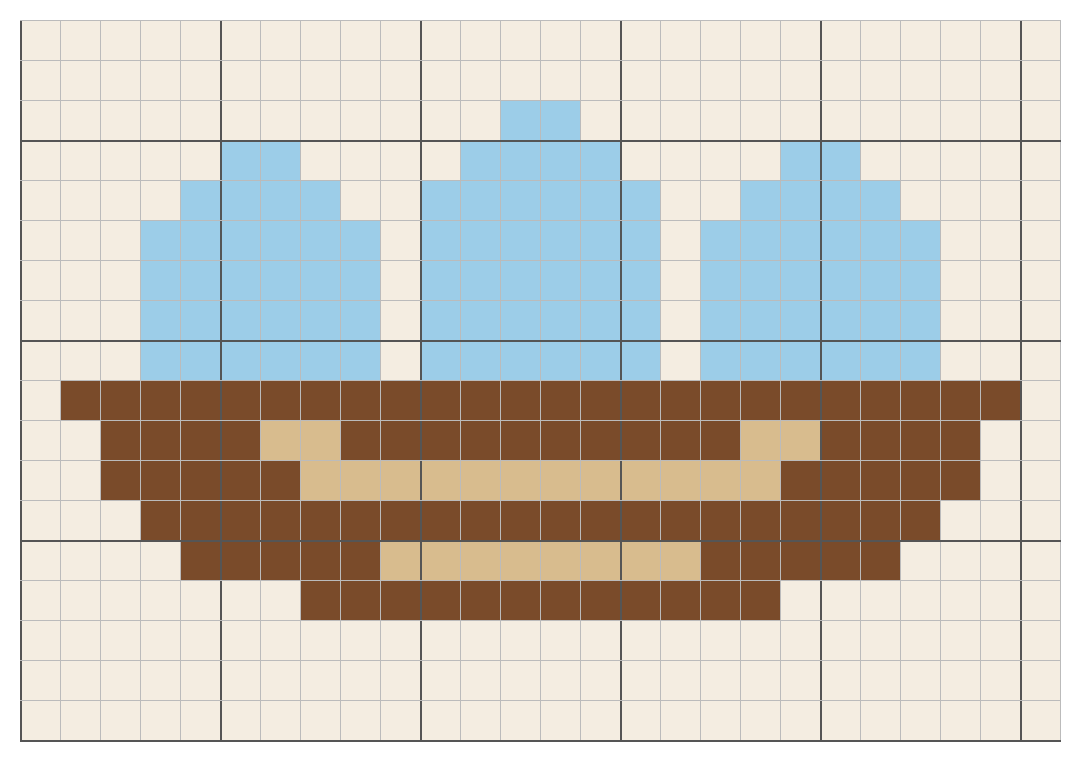
Bird’s nest crochet chart: free pattern
A woven straw nest holding three blue eggs.
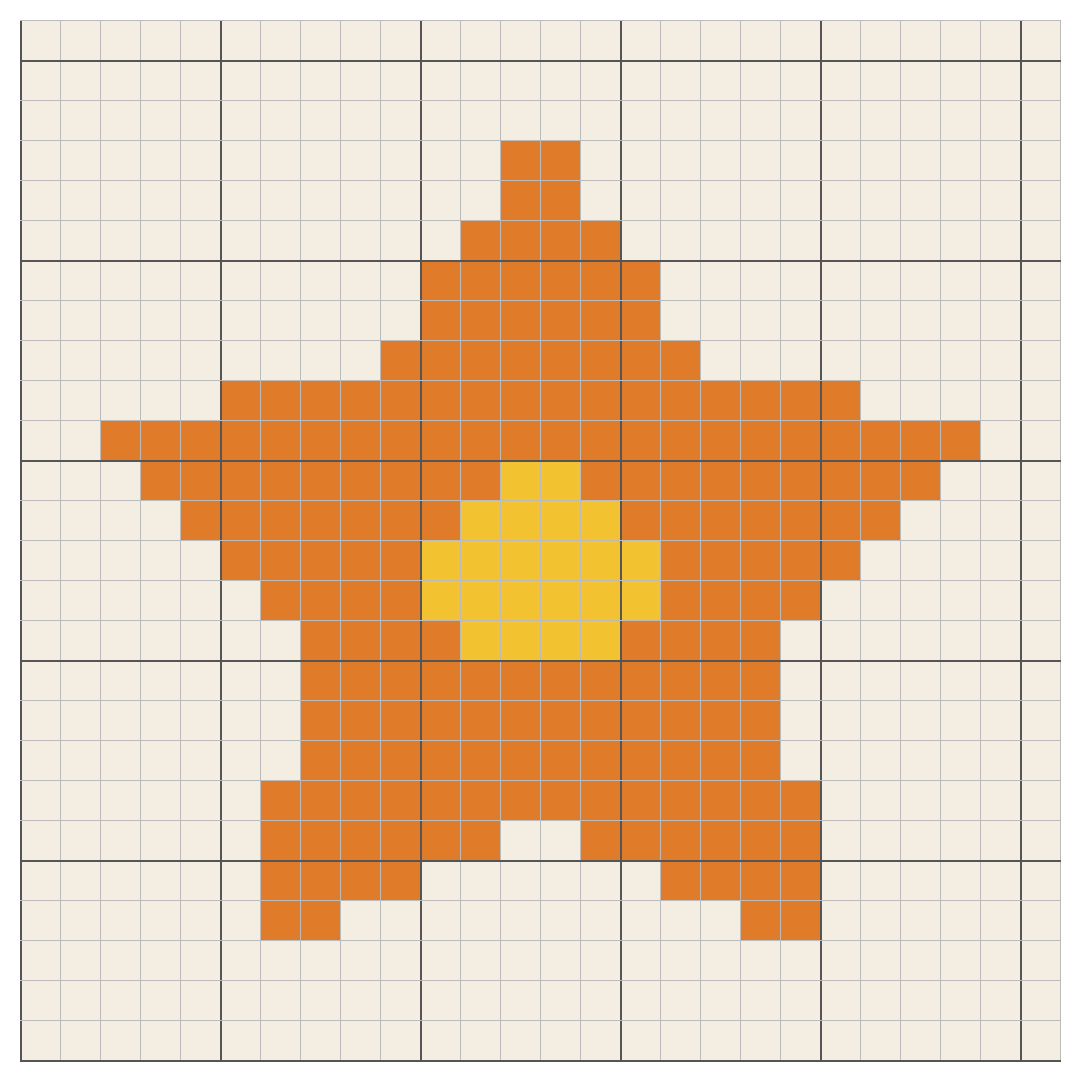
Starfish crochet chart: free pattern
An orange five-armed starfish with a yellow heart at its centre.
Whatever you pick, work a 10-stitch test square before you begin: it will tell you whether your tension is looser or tighter than mine. And keep the same ball for a whole colour, from one row to the next.
Finally, a word on the hook: if your stitches gape, go down half a millimetre; if the fabric turns stiff as cardboard, go up by the same amount. In tapestry crochet, the unused yarn runs behind the work and thickens the stitch a little, so I often take a hook slightly larger than the one printed on the ball band. This adjustment changes everything in the finish, especially on multicolour motifs. Jot down the size you get on a scrap of paper: you will find it again from one project to the next, and it saves a lot of guessing.
Amazon links are affiliate links: a purchase may earn us a commission at no extra cost to you.